Please ensure Javascript is enabled for purposes of website accessibility
Top Oversight Dem demands info from Reflecting Pool contractors overseeing renovation

Top Oversight Dem demands info from Reflecting Pool contractors overseeing renovation


(WASHINGTON) — The top Democrat on the House Oversight Committee sent letters Wednesday to the contractors overseeing the renovation at the Lincoln Memorial Reflecting Pool on the National Mall, requesting information such as contracts and water quality records.

The Reflecting Pool has been plagued with algae and peeling paint in the days since the Trump administration completed its renovation, which cost taxpayers more than $16 million.

Rep. Robert Garcia, D-Calif., sent separate letters to the company hired to paint the reflecting pool and the company hired to remove the algae that later appeared in the pool.

“Donald Trump’s disastrous renovation of our national reflecting pool is his latest failed vanity project,” Garcia said in a statement. “The President should be focused on making life more affordable for the American people, not rewarding his loyalists with government contracts and wasting taxpayer money on failing projects. We’re demanding answers straight from the contractors about the project’s failures.”

The ranking member requested information by July 8, 2026, including the scope of the work, contract performance standards, communications with the National Park Service and amounts invoiced or paid.

Democrats, who are in the minority, do not have subpoena power to compel these contractors to hand over information or even respond.

Trump said this week the Reflecting Pool will be drained again for “permanent repair” around the Fourth of July and said that six people have now been arrested for alleged damage to the site. No charges had been filed in the alleged arrests.

The Interior Department and the U.S. Park Police have not responded to multiple outreaches for evidence of the alleged vandalism.

Copyright © 2026, ABC Audio. All rights reserved.
Judge permanently blocks Trump EO requiring proof of citizenship to vote

Judge permanently blocks Trump EO requiring proof of citizenship to vote


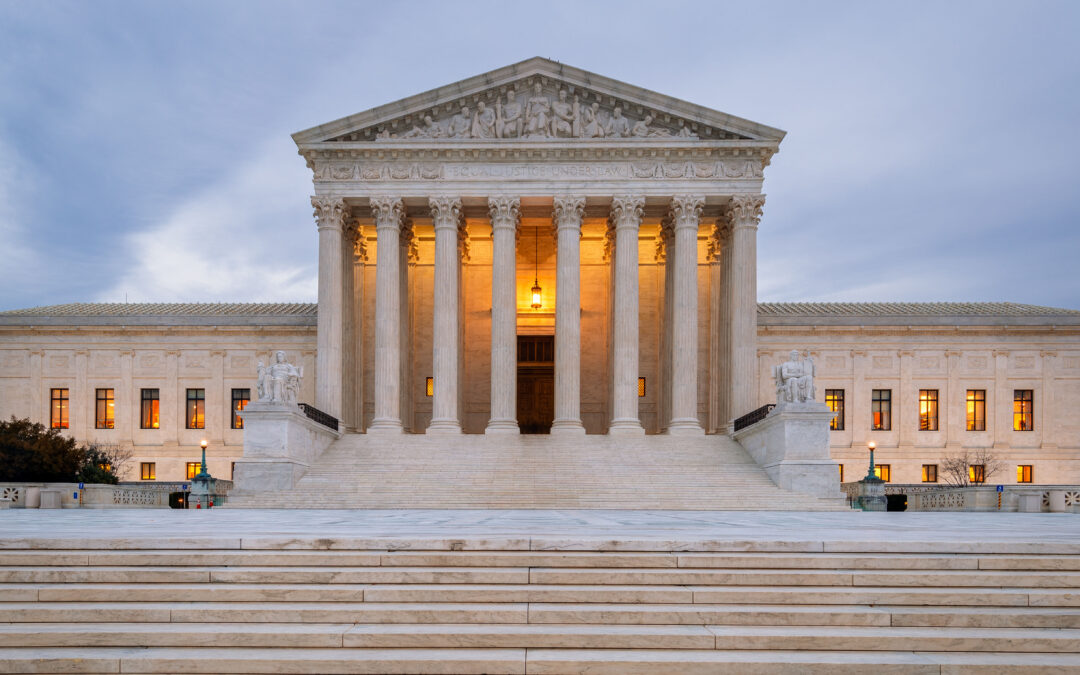
(WASHINGTON) — A federal judge on Wednesday permanently blocked the Trump administration from enforcing an executive order signed last year that required proof of citizenship to register to vote and demanded mail-in ballots be received by Election Day. 

Judge Denise Casper ruled that the president lacks the authority to oversee elections and rejected the Trump administration’s unsupported claims of “widespread illegal voting, discrimination, fraud, and other forms of malfeasance and error.”

“While the Constitution vests the President with ‘executive Power’ and commands him to ‘take Care that the Laws be faithfully executed,’ it does not grant the President any specific powers over elections,” Judge Casper wrote. 

The decision is more than a year in the making, with a group of state attorneys general last April filing a lawsuit in Boston to block Trump’s first executive order on voting. That order sought to require proof of citizenship to register to vote as well as impose an Election Day deadline for mail-in ballots, and Judge Casper last June issued a preliminary injunction blocking the policy.

In a 59-page ruling issued Wednesday, Judge Casper made that decision permanent on largely the same legal basis as her decision last year. In addition to finding that Trump overstepped his authority with the order, the judge said the Department of Justice failed to demonstrate the alleged fraud that purportedly justified the order, and the policy would have disenfranchised thousands.

“There is no evidence in this record of widespread ‘illegal voting, discrimination, fraud, and other forms of malfeasance and error’ within American elections, which the Executive Order purports to safeguard against,” she wrote. 

The ruling is the latest setback in the Trump administration’s attempt to reshape federal elections, with courts blocking multiple efforts to impose federal oversight on elections. 

Multiple lawsuits are challenging Trump’s second executive order on voting that attempted to create a national database of approved voters, and earlier this week, a judge blocked an attempt to use an immigration database to check voter rolls. Judges across the country have also rejected the Department of Justice’s attempt to obtain state voter rolls

Copyright © 2026, ABC Audio. All rights reserved.

Trump cancels signing of bipartisan housing bill until his SAVE America Act is passed

Trump cancels signing of bipartisan housing bill until his SAVE America Act is passed


(WASHINGTON) –President Donald Trump said he is putting off signing a bipartisan housing reform bill until Congress passes his signature election and voting reform legislation, the SAVE America Act.

Trump was slated to sign the legislation at noon on Wednesday on Capitol Hill, but he abruptly canceled the event just hours before it was due to start, announcing his ultimatum on social media.

“Today’s Housing News Conference and Signing is hereby cancelled until such time as we pass the desperately needed SAVE AMERICA ACT, which I consider to be a National Emergency,” the president wrote in a post.

Trump has insisted since March that he will not sign any legislation until the SAVE America Act is sent to his desk. In a social media post on March 8, Trump wrote that it “supersedes everything else.”

The SAVE America Act would make significant election and voting reforms, including requiring photo ID at polling places and proof of citizenship before a person could register to vote. It has been rejected by Democrats. Trump has pushed Republicans in the Senate to eliminate or modify the filibuster to get the bill through, though Majority Leader John Thune has maintained Republicans don’t have the votes to do so.

The housing legislation, The 21st Century Road to Housing Act, passed overwhelmingly in the House and Senate. Once signed into law, big investors will be limited from buying up single-family homes and some building regulations will be loosened in an attempt to increase supply and ease the nationwide shortage.

Trump earlier Wednesday, in a separate social media post, said the housing bill is “of minor importance” compared to lower interest rates, the reauthorization of the Foreign Intelligence Surveillance Act and the SAVE America Act.

He also criticized the legislation as “Warren centric,” referring to Democratic Sen. Elizabeth Warren, who is a co-sponsor.

Warren reacted to Trump’s cancellation of the signing ceremony, writing on X: “Huge bipartisan majorities in Congress passed a bill to lower housing costs. But at the 11th hour, Donald Trump is refusing to sign it into law. His policies have made your costs go up — and he doesn’t care.”

If a president doesn’t sign a bill or veto it, it becomes law after 10 days while Congress is in session. But if Congress were to adjourn before the 10-day period is up, the bill could languish indefinitely — a maneuver to effectively kill legislation known as a “pocket veto.”

ABC News asked the White House whether Trump intends to try to veto the bill, but the White House did not respond to the question, only referring to the president’s post cancelling the signing. The housing bill passed with veto-proof majority in both chambers.

ABC’s Alexandra Hutzler contributed to this report.

Copyright © 2026, ABC Audio. All rights reserved.

Key Army general relinquishing command

Key Army general relinquishing command


(WASHINGTON) — One of the Army’s most seasoned and high-profile officers is abruptly relinquishing command next week, according to the service.

Gen. Chris Donahue has spent the past 18 months leading U.S. Army Europe and Africa, the command responsible for Army operations across both continents. He will relinquish command halfway through what is normally a three-year assignment.

“Gen. Christopher Donahue, commanding general of U.S. Army Europe and Africa and commander of NATO’s Allied Land Command, will relinquish command on July 2, 2026,” an Army spokesperson said in a statement. “The Army thanks Gen. Donahue for his leadership of U.S. Army Europe and Africa.”

His departure comes as Defense Secretary Pete Hegseth presses ahead with a sweeping overhaul of the Pentagon’s senior ranks, firing or sidelining large numbers of top officers with little public explanation, including the Army’s top officer Gen. Randy George

The command Donahue now leads is also set to be downgraded from a four-star command to a three-star post, according to another U.S. official, part of Hegseth’s broader push to shrink the number of generals across the force.

Officers serving as four-star generals are only eligible to hold a position of that rank. If there are no other slots available, then the only option left for them is to retire.

The Atlantic first reported Donahue’s expected departure.

Lt. Gen. Kevin Admiral, the current commander of the Army’s III Armored Corps, is expected to be nominated to take over the role, according to a U.S. official.

Donahue’s resume includes command of the Army’s elite Delta Force and the famed 82nd Airborne Division, along with extensive combat experience across two decades of war. Inside the Army, he has long been viewed as one of its top officers and a potential future Army chief of staff.

He rose to wider public attention as the last U.S. service member to leave Afghanistan during the 2021 withdrawal, photographed in night vision boarding a C-17 when he was commanding the 82nd Airborne Division.

Maj. Gen. Christopher Norrie, deputy commander, U.S. Army Europe and Africa, will serve as acting commander, according to the Army.

Copyright © 2026, ABC Audio. All rights reserved.

Judge blocks Trump administration from arresting migrants at immigration courts

Judge blocks Trump administration from arresting migrants at immigration courts


(WASHINGTON) — A federal judge has blocked the Trump administration from arresting migrants at immigration courts, saying that officials violated the Administrative Procedures Act in enacting the policy.

U.S. District Judge P. Casey Pitts of the Northern District of California wrote in a blistering 71-page decision Tuesday that policies by Immigration and Customs Enforcement and the Executive Office of Immigration Review were “arbitrary and capricious” and violated the APA, and he issued nationwide injunction blocking the practice across the United States.

“Because the record before the Court demonstrates ICE and EOIR failed to provide reasoned explanations for their actions, the Court concludes that each of the challenged policies is arbitrary and capricious in contravention of the APA,” he wrote in his decision.

The Justice Department attempted to curtail the request to only the Northern District of California instead of a nationwide block.

Scenes of migrants being arrested at immigration courts across the country, including notably in New York City, drew scrutiny from local lawmakers and advocacy organizations, who said migrants were often arrested after their deportation cases were dismissed.

Deportation hearings in immigration court are legal proceedings initiated by the Department of Homeland Security in which an immigration judge determines whether a migrant should be removed from the United States. Often, an immigration judge will dismiss a case to allow the individual to pursue legal relief by seeking asylum, according to attorneys. Other times, DHS attorneys will request dismissals if the individuals are not a priority for removal.

In most cases, when a deportation case is dismissed, it is a positive outcome for a migrant. Immigration attorneys ABC News spoke with said the Trump administration has been using dismissals to detain people at immigration courts and place them into expedited removal without allowing them to fight their cases.

In previous years, ICE has prioritized conducting courthouse arrests of people who were considered risks to the public or were convicted or accused of certain crimes.

The Trump administration had argued that an executive order issued by President Donald Trump allowed for the agencies to enact the policy, but Judge Pitts disagreed.

“It is now clear that the lack of connection between ICE’s stated rationales for the 2025 courthouse-arrest policies and the expansion of arrests at immigration courthouses results not from merely unreasoned decision making but a complete lack of decision making. As the government recently revealed, contrary to its prior representations, ICE’s 2025 courthouse arrest policies do not cover immigration courthouses at all,” he wrote.

That is a reference to a case in New York, in which the DOJ notified a judge that it had been erroneously relying on an ICE memo to justify arrests at immigration courts, according to a court filing. In fact, the ICE memo does not apply to civil immigration enforcement actions in or near immigration courts, the DOJ told the judge in that case.

James Percival, the DHS general counsel, said Tuesday’s ruling is “anti-American.”

“When a judge sentences a defendant, the defendant is taken into custody. If an alien is ordered removed by an immigration judge, the same should happen,” he said in a post on X. “A district judge ordering otherwise is naked judicial activism in service of an anti-American, open borders agenda.” 

Copyright © 2026, ABC Audio. All rights reserved.

What to know about housing legislative package passed by Congress

What to know about housing legislative package passed by Congress


(WASHINGTON) — The House on Tuesday followed the Senate in passing a sweeping housing reform package and sent the bipartisan measure to President Donald Trump’s desk for his signature.

The vote in the House was 358-32. The 21st Century Road to Housing Act was brought up under suspension and reached the required two-thirds majority threshold for passage. The 32 no votes were all Republicans while all Democrats present voted in favor.

The Senate voted 85-5 to pass the bill a day earlier.

With midterm elections months away, Congress is taking noteworthy and rare bipartisan action to tackle one element of affordability, a talking point in races across the country this year.

The bill comes as a recent Zillow analysis found the cost of buying a starter home is $1 million or more in a record 242 cities across the country.

What is in the bill?

The legislation aims to address the nation’s housing shortage by increasing the supply of homes and overall homeownership. This is achieved through loosening regulations to encourage housing construction and limiting Wall Street investors’ ability to buy homes that could go to families instead.

A 2024 study from the government-sponsored housing enterprise Freddie Mac estimated that U.S. faces a shortfall of 3.7 million units contributing to its housing crisis.

The bill also provides grants to turn vacant buildings into affordable housing.

By increasing the supply of homes for sale, the legislation is intended to lower home costs for Americans.

What’s next for the bill?

The bill must go to the desk of President Donald Trump to become law.

On Wednesday, Trump said he is putting off signing the bipartisan housing reform bill until Congress passes his SAVE America Act.

Trump was slated to sign the legislation at noon on Wednesday on Capitol Hill.

He canceled the event a few hours before it was due to start, announcing his ultimatum on social media.

“Today’s Housing News Conference and Signing is hereby cancelled until such time as we pass the desperately needed SAVE AMERICA ACT, which I consider to be a National Emergency,” the president wrote in a post.

Trump has insisted since March that he will not sign any legislation until the SAVE America Act is sent to his desk. In a social media post on March 8, Trump wrote that it “supersedes everything else.”

What did the bill’s supporters say about the housing act?

“Today’s vote proves that it is possible to find bipartisan common ground on legislation that actually helps the American people, and importantly, it proves that bipartisan legislation doesn’t have to be the weakest, most milquetoast agreement that doesn’t offend anyone or do too much to help anyone,” Sen. Elizabeth Warren, the top Democrat on the Senate Banking Committee, said on the Senate floor ahead of Monday’s vote. 

“I don’t say this a lot, but today I’m proud to be a member of the United States Senate,” Warren said.

Senate Banking Committee Chairman Sen. Tim Scott, a Republican from South Carolina, discussed how the bill can give Americans more options on Monday.

“When you put more housing supply on the market, more people have a chance to become first-time homebuyers,” he said. “Today, the average first-time homebuyer is 40 years old. That is just too old.”

What did the bill’s opponents say about it?

Republican Sens. Ron Johnson (Wisc.), Mike Lee (Utah), Rand Paul (Ky.), Rick Scott (Fla.) and Tommy Tuberville (Ala.) voted against the legislation. Over the weekend, Sen. Rick Scott explained his objection to the legislation, saying he can’t see how the government can drive down the cost of housing.

“What’s going to drive down the U.S. cost of housing, two things, if you balance a budget, interest rates are going to come down, one of the biggest with lousing,” Scott said on Fox News’ Saturday in America. “Number two, most of regulation with respect to housing is not the federal level. It’s at the local level, what cities and counties are doing. The federal government cannot drive the cost of housing down.”

ABC News’ Michelle Stoddart contributed to this report.

Copyright © 2026, ABC Audio. All rights reserved.