Please ensure Javascript is enabled for purposes of website accessibility
Construction underway on UFC Octagon at White House for Flag Day fights

Construction underway on UFC Octagon at White House for Flag Day fights


(WASHINGTON) — Construction on the Ultimate Fighting Championship Octagon is underway on the White House South Lawn ahead of President Donald Trump’s planned fights this summer to commemorate the 250th anniversary of the United States.

The event, dubbed “UFC Freedom Fights 250,” will take place on June 14 — coinciding with the president’s birthday and Flag Day — and feature a lightweight title matchup between undisputed champion Ilia Topuria and interim title holder Justin Gaethje alongside four other fights.

“Selected fighters” will take home prize money — some of which will come from Crypto.com, according to UFC.

The scaffolding — which will frame and light the cage where the fight is occurring, according to renderings shared by UFC — is visible from the White House North Lawn, cresting over the historic West Wing and Oval Office. 

Trump has repeatedly touted the popularity of the fight, claiming at the congressional picnic earlier this month that he had “never seen anybody want anything so much as people want those tickets.”

In an Oval Office event featuring some of the fighters earlier this month, including Topuria and Gaethj, Trump claimed that tickets would be free to attendees and that tens of thousands of people would be able to congregate on the South Lawn and surrounding parks to witness the event.

“Our country is invited to this, it’s free,” Trump told reporters, claiming that the Ellipse would be able to house 75,000 to 100,000 fans beyond the main stage on the South Lawn. “They’re going to set up eight big screens and they’re going to have the fight. And then out here, we’re going to have 4,000 seats right in front of the front door of the White House.”

On Saturday, UFC shared new renderings to social media of what the event is expected to look like. The images featured a large fighting cage surrounded by stadium seating as well as an overview of the “UFC Freedom 250 Fan Fest” in Ellipse Park.

In a statement, White House spokesperson Davis Ingle said the event “will be one of the greatest and most historic sports events in history.”

“President Trump hosting it at the White House is a testament to his vision to celebrate America’s monumental 250th anniversary,” he said.

Copyright © 2026, ABC Audio. All rights reserved.

Federal court blocks Alabama effort to use GOP-friendly congressional map

Federal court blocks Alabama effort to use GOP-friendly congressional map


(WASHINGTON) — A three-judge panel in a federal court in Alabama ruled unanimously on Tuesday that state Republicans are still blocked from using their 2023 congressional map, which would have potentially helped Republicans in November.

Alabama had moved forward with using the 2023 map after state lawmakers had said the Supreme Court’s historic decision in Louisiana v. Callais in late April cleared the way for it.

The judges, including two appointed by President Donald Trump, concluded that the high court’s recent ruling on Section 2 of the Voting Rights Act has no bearing on this case, in which lower courts found the 2023 map represents a constitutional violation.

“Ultimately, we cannot see our way clear to requiring Alabamians to cast their votes in the 2026 elections under a districting plan tainted by intentional race-based discrimination,” the judges wrote in their ruling.

In 2024, Alabama had been required to use a map with two majority-Black districts, one of which was won by Democratic Rep. Shomari Figures. But in the wake of the Supreme Court decision, some state lawmakers and the governor delayed some of Alabama’s House elections, although others were held on May 19 as scheduled.

As of now, Alabama must move forward with the 2024 map, unless, the court noted on Tuesday, lawmakers want to attempt to enact a new congressional district plan at this late hour, which it is free to do. 

Figures, in a statement to ABC News, said that he also expected further legal battles. The 2023 map was expected to potentially help Republicans flip Figures’ seat in November. 

“I am pleased with the Court’s decision, but this case is still not over,” Figures said. “Although we expected the Court to reach this decision given the overwhelming evidence, we fully expect the State to immediately appeal the decision to the Supreme Court. This is a significant step in the right direction, but there is still a long way to go before this fight is settled.”

Alabama Attorney General Steve Marshall said he is “disappointed” by the decision and said there will be an appeal effort.

“I am disappointed, but not at all surprised, that the three-judge panel has again struck down Alabama’s blandly unobjectionable congressional map that has been in place for decades. I find nothing in the U.S. Supreme Court’s vacatur order of May 11 that would provide a basis for this outcome; thus, we will immediately appeal this decision to the Supreme Court,” Marshall said in a statement.

“This is a very fluid situation, and I will do my best to keep the People of Alabama apprised of our efforts. Know this—in my mind, it is not a matter of whether we win this case, only when.”

Copyright © 2026, ABC Audio. All rights reserved.
Texas Senate runoff tests Trump’s influence

Texas Senate runoff tests Trump’s influence


(WASHINGTON, D.C.) — Voters in Texas go to the polls on Tuesday to decide the Republican nominee in a pivotal Senate race that could decide control of the Senate — and serves as a test of President Donald Trump’s influence.

Also on the ballot are several member-on-member matchups and a candidate, Maureen Galindo, who has already been condemned by top Democrats for her campaign’s controversial comments.

Trump weighs in on Texas Senate race

Trump’s last-minute endorsement in the Texas Senate primary runoff race of Attorney General Ken Paxton over incumbent Republican Sen. John Cornyn has shaken up a race that could become critical for the fight to control the Senate next year.

Cornyn narrowly led the field in March’s primary with 42% of the vote, followed by Paxton’s 40%, to make the runoff over GOP Rep. Wesley Hunt.

This comes after Trump’s endorsement power was proven to prevail in recent primaries — with the president successfully ousting non-endorsed incumbent Republicans this month, including Kentucky Rep. Thomas Massie and Louisiana Sen. Bill Cassidy.

And while Trump has praised Cornyn as a “good man,” he made clear that he feels the senator was “not supportive” enough in the past. Cornyn is also backed by the campaign arm of Senate Republicans and many of his Senate colleagues have stood by his side despite the president’s endorsement, citing their belief that Paxton’s past controversies could put this safe Republican seat at risk.

The bitter Republican battle is also the most expensive primary runoff, according to AdImpact, after the race already made history as the most expensive Senate primary election in March. According to AdImpact, $100 million has been spent in the primary and $25 million has been spent for the runoff.

Texas House races

The Houston-area 18th Congressional District is no stranger to showing up to vote — this House seat has seen six elections in the last two years.

The deaths of the last two members to represent the district, Reps. Sheila Jackson Lee and Sylvester Turner, left the district without representation for large swaths of time. Rep. Christian Menefee, the current representative for the district, has only served in office for a few months after winning the seat in a special election.

He faces off against Rep. Al Green, a longtime member of Congress, who represents the neighboring 9th District, which has been redrawn to favor Republicans.

In Dallas, another contentious Democratic primary pits a current member against a former one. Redistricting of nearby districts has drawn top candidates into the primary for the state’s 33rd Congressional District: Rep. Julie Johnson, who currently represents the neighboring Texas’ 32nd Congressional District, and Former Rep. Colin Allred, who left that seat in 2024 to run for Senate.

Texas’ 35th Congressional District features competitive runoffs on both the Republican and Democratic sides. The district was redrawn to favor Republicans, but Democrats hope low approval for Trump and a strong candidate could give them a fighting chance.

Galindo, who came in first in the March Democratic primary for the 35th District with 29% of the vote, has been the subject of major controversy for her campaign’s social media posts. A now-deleted Instagram post from her campaign read that Galindo will turn an ICE detention center “into a prison for American Zionists.” She has previously called for all candidates who take campaign contributions from Israel to be “tried for treason.” While she has not denied the comments, she has added that “putting billionaire Zionists in prison does not mean putting all Jews in internment camps.”

She was condemned by Democratic Congressional Campaign Committee Chair Suzan DelBene, who said Galindo’s “vile language” is “disqualifying and has no place in American Politics.”

The largest financial backer of Galindo’s campaign is a newly created Super PAC called “Lead Left.” Democrats have condemned Lead Left’s involvement in the race and accused Republicans of being behind the PAC — with House Democratic Leader Hakeem Jeffries and DelBene last week calling on House Republican leaders to stop “propping up” Galindo and “forcefully condemn” her comments.

ABC News has reached out the National Republican Congressional Committee for comment.

Galindo’s campaign did not respond to requests for comment. She will face off against former Bexar County Sheriff’s Department Spokesman Johnny Garcia.

State Rep. John Lujan and Trump-endorsed Air Force veteran Carlos De La Cruz are facing off in the Republican runoff for the 118th Congressional District. They received 32% and 26% of the vote in March’s primary, respectively. Victory for Lujan could mark the first Trump-endorsed candidate to lose their primary this cycle. 

Copyright © 2026, ABC Audio. All rights reserved.
Tulsi Gabbard is resigning as director of national intelligence

Tulsi Gabbard is resigning as director of national intelligence


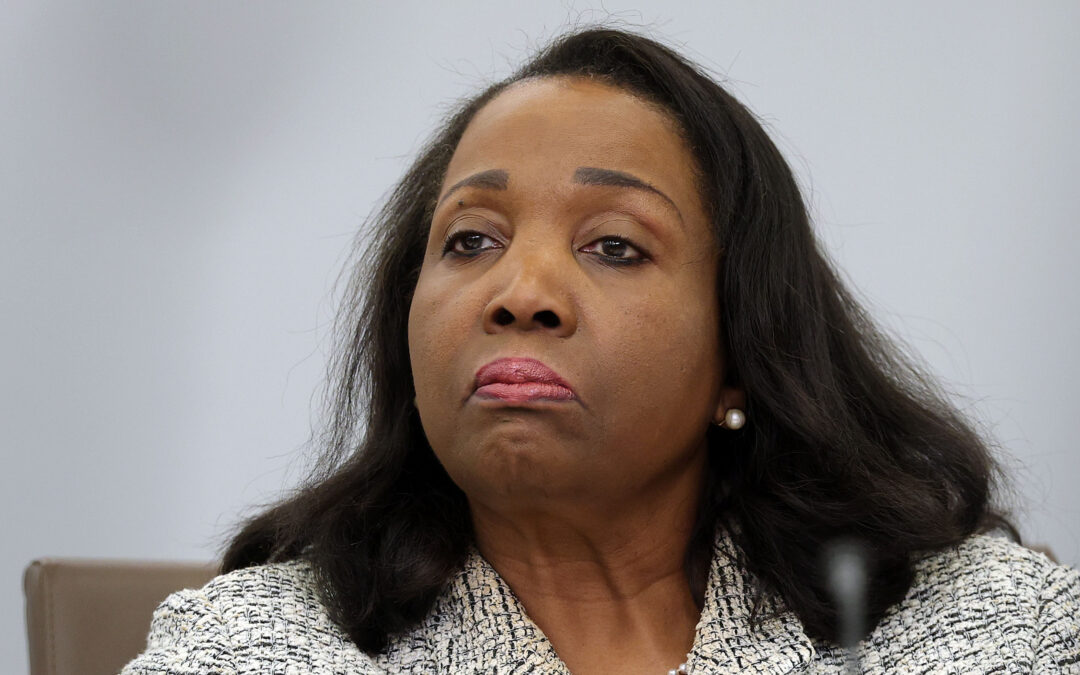
(WASHINGTON) — Director of National Intelligence Tulsi Gabbard is resigning from her post.

Gabbard is stepping down after her husband of 11 years, Abraham Williams, was recently diagnosed with “an extremely rare form of bone cancer,” according to a resignation letter she posted to social media.

In the letter to President Donald Trump, Gabbard said Williams “faces major challenges in the coming weeks and months.”

“At this time, I must step away from public service to be by his side and fully support him through this battle,” Gabbard wrote.

Her resignation is effective June 30, 2026, according to the letter.

Trump confirmed in a social media post that Gabbard will be resigning from her position, praising her for having done an “incredible job” and adding that the administration will “miss her.” 

The president added that Principal Deputy Director of National Intelligence Aaron Lukas will serve as acting DNI. 

The news of Gabbard’s departure was first reported by Fox News.

Her departure marks the latest Cabinet-level shakeup of Trump’s second term after departures by former Attorney General Pam Bondi and Homeland Security Secretary Kristi Noem earlier this year.

Gabbard ends a tenure marked by two major conflicts abroad, politically charged election-related investigations at home and the unresolved tension between the anti-war message that first defined her rise in politics and the national security office she later came to hold. 

Gabbard was an unconventional pick to lead the sprawling network of 18 intelligence agencies with a $100 billion budget.

The former Democratic congresswoman from Hawaii and onetime Democratic presidential candidate broke with her party, moved into Trump’s orbit during his 2024 campaign and joined the Republican Party.

Gabbard leaves office after months of scrutiny over the Iran war, the administration’s military escalation in Venezuela, the resignation of National Counterterrorism Center Director Joe Kent over Iran and continuing fallout from the administration’s 2020 election investigations, including the Fulton County, Georgia, probe.

In the position, Gabbard played a critical role in determining what material is included in the president’s daily intelligence briefings.

But months into the administration, rifts began to form.

Gabbard posted a video in June to her personal account on X issuing a stark warning about the threat of nuclear war.

Opposition to U.S. intervention 

The administration’s military action against Venezuela stood in tension with her earlier opposition to U.S. intervention in other countries and her past criticism of regime-change efforts aimed at Venezuelan leader Nicolás Maduro.

Gabbard’s departure also follows the March resignation of Kent, the Trump administration’s top counterterrorism official, who reported directly to her at ODNI and announced he could not “in good conscience” support the Iran war. 

In a resignation letter posted publicly on social media, Kent said Iran posed “no imminent threat” to the U.S. and argued the administration had been pulled into war by Israel. Since leaving office, Kent has continued to say publicly that “Israel drove the decision” to strike Iran. 

Gabbard also leaves office amid continuing fallout from the administration’s investigations into the 2016 and 2020 elections, including the investigation in Georgia, where her role drew sharp scrutiny. 

Gabbard arranged for FBI agents who searched the Fulton County Elections and Operations Hub in January to have a phone call with Trump, according to multiple sources familiar with the situation. 

The president, according to multiple sources, addressed the agents on speakerphone and said they were doing great work in searching and investigating Georgia’s elections. 

Fulton County officials say FBI agents removed 700 boxes containing ballots and other materials associated with the 2020 election after obtaining a search warrant approved by a federal magistrate judge. 

As part of the probe, investigators have gone ballot by ballot, searching for any irregularities, sources have told ABC. 

The Iran war is now in its 12th week after Trump announced in February that the U.S. and Israeli forces launched attacks on Iran with the goal of eliminating Iran’s ambitions to obtain a nuclear weapon.

Gabbard’s 2025 congressional testimony came under renewed scrutiny this year as Democratic lawmakers pressed her on the intelligence community’s assessment of Iran’s nuclear program and Trump’s public pushback last summer. 

In that testimony, Gabbard said the intelligence community assessed that Iran was not “building” a nuclear weapon and that Supreme Leader Ali Khamenei had not authorized the nuclear weapons program he suspended in 2003.

Last that summer, ahead of the war’s start, Trump was asked to weigh in on Gabbard’s assessment.

“I don’t care what she said,” Trump replied at the time. “I think they were very close to having a weapon.”

Later, Trump again rebuked Gabbard and the intelligence community as “wrong” on Iran’s nuclear capability.

Gabbard came out after and said she and Trump were “on the same page” regarding Iran’s nuclear timeline and said her testimony was being misconstrued.

After the second time Trump said she was “wrong,” Gabbard posted on X, “America has intelligence that Iran is at the point that it can produce a nuclear weapon within weeks to months, if they decide to finalize the assembly. President Trump has been clear that can’t happen, and I agree.”

In March, Rep. Jimmy Gomez pressed Gabbard on remarks she made last year that Iran was not building a nuclear weapon and Trump’s public pushback at the time.

Gabbard said in the exchange that “context matters” and she “stand[s] by the intelligence community assessment.”

Copyright © 2026, ABC Audio. All rights reserved.
Trump lashes out at Republicans amid revolt over $1.8B ‘Anti-Weaponization Fund’

Trump lashes out at Republicans amid revolt over $1.8B ‘Anti-Weaponization Fund’


(WASHINGTON) — President Donald Trump attacked outgoing Republican Sen. Thom Tillis on Friday, calling him a “RINO” — an acronym for “Republican in Name Only” — and a “quitter” as he appeared to acknowledge the ongoing revolt among some in his own party.

“I called him a ‘Nitpicker,’ always fighting against the Republican Party, and ME, mostly on things that didn’t matter,” Trump wrote in a social media post.

“Now he can have all the fun he wants for a few months, with some of his RINO friends, screwing the Republican Party. In the end it will only get bigger, and better, and stronger, than ever before!!!” Trump said.

Tillis is among several Republican lawmakers to criticize aspects of Trump’s agenda, most recently the creation of a nearly $1.8 billion so-called “Anti-Weaponization Fund” to compensate those who allege they were wrongly targeted under the Biden administration. The fund was created as part of a settlement agreement in President Trump’s $10 billion lawsuit against the Internal Revenue Service.

Tillis slammed the fund as the “payout pot for punks.” Critics have said that those who committed violence against police, including Jan. 6 rioters, might be eligible for compensation in addition to Trump’s political allies.

“These people don’t deserve restitution, they — many of them deserve to be in prison,” Tillis said on Thursday. “Some of them deserve the pardon because they were over prosecuted, but this is, I mean, this is just stupid on stilts.” 

Congressional Republicans on Thursday punted plans to advance a $70 billion immigration bill as Senate Republicans were poised to try to rein in spending for the so-called anti-weaponization fund, as well as Trump’s East Wing expansion and White House ballroom construction project.

Several Republicans who Trump has spurned have become the fund’s most outspoken critics, including Louisiana Sen. Bill Cassidy. Cassidy lost his primary race last week after Trump endorsed his opponent.

“People are concerned about paying their mortgage or rent, affording groceries and paying for gas, not about putting together a $1.8 billion fund for the President and his allies to pay whomever they wish with no legal precedent or accountability,” Cassidy wrote on X.

Trump on Friday suggested that Tillis’ choice to not run for reelection was in some part because Trump declined to give him an endorsement. 

“When I told him that I would not, under any circumstances, endorse him for another run, too much work and drama (he couldn’t have won, anyway!), he immediately quit the race and publicly announced that he was going to ‘retire.’ I said, ‘Wow, great news, that was easy!'” Trump wrote in the post. 

When Tillis announced last year that he wouldn’t run for reelection, he said is a statement that it was “not a hard choice” to rule out running for a third term as he was finished with “navigating the political theatre and partisan gridlock in Washington.”

Tillis was asked by reporters on Thursday what he thought of Trump going after some Republican incumbents in primary races. 

“Be careful what you ask for,” Tillis responded.

In defense of the fund, which has also drawn legal challenges, Trump on Friday claimed he “gave up a lot of money” by allowing it to move forward and that he could have made an “absolute fortune” if he hadn’t made the IRS settlement.  

“Instead, I am helping others, who were so badly abused by an evil, corrupt, and weaponized Biden Administration, receive, at long last, JUSTICE!,” Trump wrote in another social media post.

ABC News’ Isabella Murray and Allison Pecorin contributed to this report.

Copyright © 2026, ABC Audio. All rights reserved.

Senate goes on break amid GOP plan to curtail Trump ‘anti-weaponization’ and ballroom funding

Senate goes on break amid GOP plan to curtail Trump ‘anti-weaponization’ and ballroom funding


(WASHINGTON) — Republicans are punting on plans to advance a $70 billion immigration bill, retreating after meeting with Acting Attorney General Todd Blanche to address concerns about the administration’s anti-weaponization fund.

The move pushes the process until at least after their weeklong Memorial Day recess after the House and Senate were sent home Thursday afternoon.

Earlier, Senate Republicans were poised to try to rein in two of President Donald Trump’s controversial spending wishes: $1 billion for the East Wing expansion and nearly $1.8 billion for an “Anti-Weaponization Fund,” two people familiar with the matter confirmed to ABC News.

Blanche canceled pre-scheduled travel to go up to Capitol Hill to attempt to quell the growing Republican outrage over the “anti-weaponization fund,” which would be used to compensate allies who say they have suffered injustices at the hand of the Biden administration. But Blanche’s meeting seems to have completely backfired.

There was yelling in the room, multiple sources told ABC News, with some senators — even some vocal Trump supporters — telling Blanche they believed they’d lose the Senate majority over the fund.

Blanche even tried to placate Republican senators by releasing a fact sheet earlier Thursday that stated they themselves can apply to receive money from the fund.

Republicans are looking at ways to use the bill to impose guardrails on Trump’s “anti-weaponization” fund.

On Wednesday afternoon, some Republicans told reporters that the $1 billion for White House security — including funding for the ballroom — would likely be removed from the bill because there was a lack of GOP support.

Because the text of the new bill hasn’t been made public, it’s not yet clear exactly what restrictions Republicans may try to impose on the “Anti-Weaponization Fund,” the core of the settlement between the Department of Justice and Trump to resolve his $10 billion lawsuit against the IRS.

The taxpayer-funded pool of money will be administered by a five-person commission appointed by the acting attorney general with little oversight aside from the president, who could remove members. 

Senators were working on potential provisions to address their concerns on the fund, but by Thursday afternoon, those discussions still appeared to be very far apart.

Republican Sen. Susan Collins said “no,” Blanche did not change her mind about the weaponization fund.

Republican Sen. John Hoeven said the “consensus building process” on the matter is “going to require more work.”

“We just don’t have the right configuration where we know we have 50 votes,” he said. 

Republicans could try to embed guardrails for the fund in the actual bill, or they could instead try to offer an amendment addressing the fund once the bill is on the Senate floor.

However, if Republicans don’t do something, it is widely expected that Democrats will certainly try to.

Senate Republicans are aiming to muscle the $70 billion immigration enforcement package through using a budget tool called reconciliation, which will allow them to pass the bill with a simple majority of votes in the Senate instead of the usual 60 votes that it takes to approve most legislative matters.

But before the bill can pass, there will be a voting marathon known as a vote-a-rama, during which lawmakers are able to offer unlimited amendments to the bill.

Democrats are powerless to block this package from passing if Republicans stick together, but Democrats could put forward a number of amendments that force Republicans to take politically tricky votes.

If Republicans do not come up with a clear way to address the “anti-weaponization” fund in their underlying bill or in an amendment that is popular with Republicans who oppose the fund, Democratic-led amendments that look to restrict the fund could very well get the necessary GOP support to pass on the Senate floor.

Some Senate Republicans who Trump has publicly scorned in recent weeks have become the fund’s most outspoken critics, including Sen. Bill Cassidy, who lost his primary race in Louisiana after Trump endorsed his opponent.

Cassidy spoke out on Wednesday night, bashing the fund.

“People are concerned about paying their mortgage or rent, affording groceries and paying for gas, not about putting together a $1.8 billion fund for the President and his allies to pay whomever they wish with no legal precedent or accountability. This is adding to our national debt. If there needs to be a settlement, the administration should bring it to Congress to decide,” Cassidy wrote in a post on X.

Regardless of what Republicans do, Democrats are expected to use the vote-a-rama to force a number of votes that they hope will pin down Republicans on the fund.

Democratic Sen. Richard Blumenthal told ABC News on Wednesday that he intends to force votes on amendments to “stop this illegal abhorrent slush fund” during the vote-a-rama.

With enough GOP support, Democrats could have a real chance of putting restraints on — or even eliminating — this fund as part of the massive package. Depending on how Democrats craft their amendments surrounding the IRS fund, it could take as few as four Republican supporters to pass some of them.

What happened to the ballroom funding?

The $1 billion that was intended for White House security, including the security aspects of Trump’s ballroom, is being scrapped by Republicans, according to some GOP lawmakers. The Republican lawmakers are saying there isn’t enough support in their conference to move forward with the funding.

The Senate’s rule keeper said over the weekend that $1 billion could not be included in the bill under the Senate rules. Even though some Republicans initially said they’d redraft the measure, a number of GOP senators came out forcefully against the $1 billion allocation and threatened to tank the entire bill if it was not removed.

Democrats were expected to call up a number of amendment votes to try to strip the ballroom funding out of the bill. Those amendments only would have needed the support of four Republicans and likely would have passed.

Copyright © 2026, ABC Audio. All rights reserved.