
Please ensure Javascript is enabled for purposes of website accessibility
A NASA probe from the ’70s is still talking, and Wednesday it will be a light-day away

A NASA probe from the ’70s is still talking, and Wednesday it will be a light-day away

In 1977, NASA launched Voyager 1, a robotic space probe built to explore the farthest reaches of our solar system. It was supposed to be a 5-year mission.

Nearly 50 years later, it’s still going. 

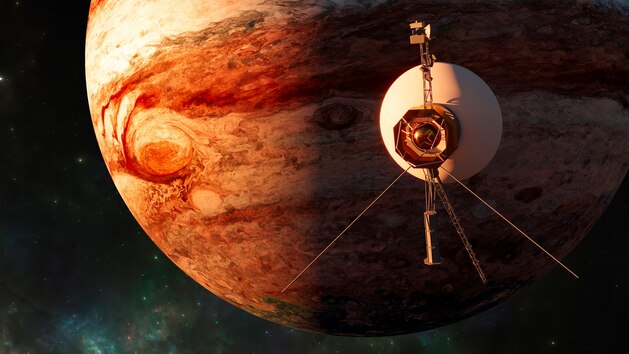
On Wednesday at 5:16 a.m. ET, the spacecraft will be one light-day, the distance light travels in 24 hours, from Earth. More than 16 billion miles away from home and traveling 38,000 mph, it will be the first human-made object to reach one light-day away from our planet.

“It’s just a real testament to what humans can build, and it’s truly breaking new ground every second as it progresses further and further into interstellar space,” Casey Dreier, The Planetary Society’s chief of space policy, told ABC News. “This is the furthest out that any human thing has been sent that is still talking to us. That is just truly remarkable.”

If you search for photos of Jupiter, Saturn, Neptune or Uranus, there’s a good bet the image was taken by Voyager 1 or its sibling spacecraft, Voyager 2. And while the data collected by the probe’s nearly dozen scientific instruments have kept scientists busy for decades, Voyager’s greatest legacy is arguably the imagery that exposed millions of people to the beauty and mystery of our solar system for the first time.

“This was full-color, beautiful, glossy photos that suddenly made these points of light into real worlds and real systems,” said Dreier. “It told us how much we didn’t know about the solar system in which we inhabit, and it is hard to overstate the contributions of the two Voyager spacecraft to our understanding of where we live in space.”

Although Voyager 1 launched after Voyager 2, its faster route allowed it to overtake its twin shortly after it left Earth. It reached Jupiter in 1979 and made one of its first discoveries: a faint ring system around the planet. While two other probes, Pioneer 10 and 11, had previously flown past the planet, their imaging abilities were extremely limited. Voyager’s camera captured the planet in a way never seen before, showing a turbulent atmosphere and taking a picture every 96 seconds during its approach, which NASA used to create a time-lapse movie of the planet in motion.

In 1980, Voyager arrived at Saturn and found five new moons and a new ring. Once again, the probe sent back stunning images of the planet and six of its moons, providing evidence that those moons are largely made up of water ice. Images and data from Titan, one of Saturn’s most interesting moons, showed it has a thick atmosphere composed mostly of nitrogen, with methane and hydrocarbons. This chemical soup may resemble what Earth was like billions of years ago. NASA’s Dragonfly rotorcraft is slated to launch to Titan in 2028 to study its habitability. 

In 1990, Voyager 1 took the famous pale blue dot photo of Earth from a distance of 3.7 billion miles, at the suggestion of astronomer Carl Sagan, who later named one of his books after it. At the same time, Voyager also took a “family portrait” of six of our solar system’s planets.

Now traveling in interstellar space, a vast, empty region between star systems, Voyager 1 still transmits information back to Earth, which will now take 24 hours to reach its destination. NASA briefly lost communications with the vehicle in Oct., but it came back 48 hours later. The agency has also shut down several instruments over the years to save power. 

Eventually, Voyager’s plutonium power source will die, but physics will keep it moving through deep space. And since there’s not much there to impede its progress, it could keep going long after we are gone.

But our species’ fingerprints will remain with Voyager in the form of a nearly 12-inch gold-plated copper disk inscribed with Earth’s location relative to several pulsars. The playable record contains greetings in 55 languages, audio clips of human and animal sounds, 90 minutes of music from different periods and images of life on our planet.

“It carries a little testament to the humans and the world that made it. That billions of years from now, when our planet is engulfed by the Sun and everything on this world no longer exists. Voyager will still exist, and it’ll carry a little signature of gold written in gold of this planet and its humans,” explained Dreier.

Copyright © 2026, ABC Audio. All rights reserved.
Officials investigating steering of tanker in New Orleans riverboat collision: NTSB

Officials investigating steering of tanker in New Orleans riverboat collision: NTSB

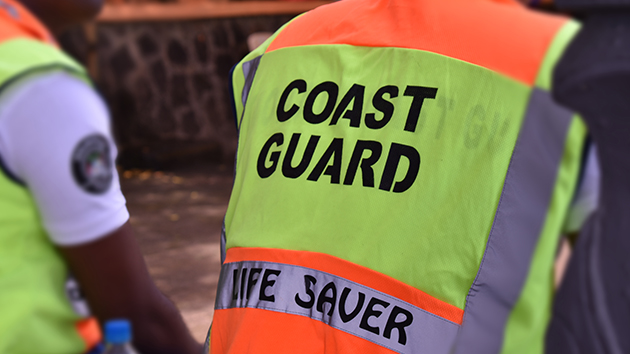
Federal authorities said on Sunday that the steering of the tanker ship is the focus of an investigation into why the vessel collided with a docked riverboat on the Mississippi River in New Orleans.

More than 30 people were injured in the collision on Friday near the Port of New Orleans, officials said. The riverboat capsized in 22 minutes, according to the National Transportation Safety Board (NTSB).

Nearly 200 people were on board the cruise ship, American Heritage, when the Atlantic Asphalt tanker collided with it, according to New Orleans officials. All have been accounted for, according to New Orleans Mayor Helena Moreno, calling it a “miracle on the Mississippi.”

NTSB member John DeLeeuw said during a Sunday news conference that preliminary information indicates the Atlantic Asphalt experienced a “steering casualty” as it traveled upbound on the Mississippi River toward Reserve, Louisiana.

DeLeeuw said that at the time of the collision, the tanker had 19 crew members aboard, and the American Heritage was carrying 140 passengers and 50 crew members and was docked at New Orleans’ Thalia Street Wharf.

Bart Barnum, a senior NTSB marine investigator, said the voyage data recorder (VDR) was recovered from the tanker and that investigators downloaded nine hours of data, including information from the time of the collision.

“It experienced a steering casualty resulting in the rudder remaining to starboard,” Barnum said of the Atlantic Asphalt, citing preliminary VDR data. “Following the steering casualty, the Atlantic Asphalt veered to starboard toward the east bank of the river.”

Barnum said that as the tanker approached the east bank, the VDR recorded audio sounds consistent with the tanker’s whistle, warnings and requests for assistance broadcast over the vessel’s marine radio, commands to deploy the vessel’s anchors, and emergency ship handling orders.

He said the tanker broadsided the American Heritage around 12:28 p.m.

Barnum said it remains under investigation what caused the tanker’s rudder to remain in the starboard position.

Within hours of the crash, the Board of Commissioners of the Port of New Orleans filed a federal lawsuit against that Marshall Islands-flagged tanker, its registered owner and a company that handles safety management for the tanker.

The lawsuit, filed in U.S. District Court for the Eastern District of Louisiana, asked the court to seize and sell the tanker, alleging the crash caused at least $1 million in damage to its terminal “with additional substantial direct, indirect and consequential damages anticipated.” 

Thirty passengers from the cruise ship and two officers who ended up in the water were hospitalized with non-critical injuries, according to officials. By Saturday afternoon, all but eight of those victims were released from the hospital, New Orleans Mayor Moreno said.

Two of those patients were in serious condition while the others were in stable condition, officials said.

No children were involved, authorities said.

The tanker, according to the Port of New Orleans lawsuit, is owned by Nave Shipping SA, which is registered in Monrovia, Liberia. Nave Shipping is a subsidiary of the China State Shipbuilding Corporation, a Chinese state-owned conglomerate, according to the Associated Press, which cites the live shipping tracker MarineTraffic.

Both Nave and the Singapore company Thome Ship Management Pte, Ltd, are named as defendants in the lawsuit. Thome Ship Management, according to the lawsuit, is the ISM manager of the Atlantic Asphalt tanker and responsible for the “effective implementation of the ‘International Safety Management’ Code aboard the ATLANTIC ASPHALT.”

Thome Ship Management said in a statement on Saturday it is fully complying with the local authorities as they carry out the necessary investigations.

China State Shipbuilding Corp did not respond to an emailed request for comment, according to the Associated Press. It is not named in the lawsuit.

In the lawsuit, the Port of New Orleans asked that a lien it says it has against the tanker be enforced by the court and the vessel seized and sold to cover its claimed damages. A judge issued a warrant Friday giving federal officials control of the ship for now, according to the Associated Press.

The cause of the collision remains under investigation by the NTSB.

Copyright © 2026, ABC Audio. All rights reserved.
Apple launches an AI health tool as part of a research study

Apple launches an AI health tool as part of a research study

Artificial intelligence chatbots are becoming popular tools for people seeking information about their health. But so are headlines about possibly incorrect or even harmful information.

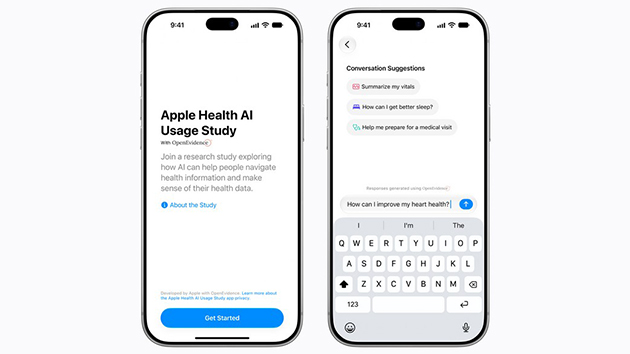
On Sunday, Apple announced a new approach, launching the Apple Health AI Usage Study app that they say will answer health questions only using trusted medical research and based on your health metrics and records — if you choose to allow it. 

The study hopes to evaluate user trust, how well information is understood, how helpful the information is and how much it helps patients interact with their doctors.

“It’s important to create interactions that are responsible, easy to understand, and can help someone navigate traditional care,” Dr. Sumbul Desai, Apple’s vice president of Health and Fitness, told ABC News. “When people have access to clear, medically grounded information, they can walk into their doctor’s appointments feeling more prepared, informed, and confident. Rigorously studying these experiences is essential to ensuring AI serves as a bridge, not a barrier, to better care.”

Users will be able to ask the study app everyday health questions and see linked, peer-reviewed clinical citations — showing users where the advice is coming from.

Apple is collaborating with OpenEvidence, an AI tool that is used by doctors and is trained on sources like medical journals that may not be available to other AI platforms.

Full access to OpenEvidence is currently only available to health care professionals and returns answers in a language that they are used to.

Apple says they are using their own technology to turn that research into easy-to-understand answers.

According to a February 2026 Oxford study published in Nature Medicine, AI chatbots accurately identify medical conditions nearly 95% of the time when tested on clinical cases, yet everyday users reach the right answer less than 35% of the time when trying to understand dense guidance. Yet 35% of adults, or about half of adults under 30, are already using AI chatbots, according to the Pew Research Center.

“Millions of people are turning to AI for health advice, but accurate answers aren’t always useful. Confusing or incomplete information can create false reassurance or delay care. We need to understand how people actually use these tools,” said Dr. John Brownstein, professor of pediatrics and biomedical informatics at Harvard Medical School and an ABC News contributor.

Users who sign up for the study can also choose to share or not share data that they may already have on their phone’s health app, such as resting heart rate, activity, sleep, or blood test results, to get more personalized responses.

The study will also explore how health AI can potentially help participants better prepare for clinical visits with their own doctors and will ask the user for feedback along the way about how the experience is going. For example, someone asking how to improve their resting heart rate could receive advice based on their own health measurements, rather than general recommendations.

“We’re collecting enormous amounts of personal health data through phones and wearables, but turning that information into something people can actually understand and act on remains a challenge,” Brownstein said.

Another part of the research is finding out whether users understand the answers they receive. Participants can rate the answers they receive and complete occasional surveys to share their experiences.

“We need to understand not just whether AI provides accurate answers, but whether people understand those answers, trust them appropriately and ultimately make better health decisions,” Brownstein said.

What about privacy and safety?

Apple says questions are processed through privacy protections designed to remove identifying information before reaching OpenEvidence.

OpenEvidence will delete question-and-response data within 24 hours and not train its model on the queries, according to Apple. The app also includes safeguards intended to recognize potentially dangerous situations and encourage users to seek professional medical assistance.

Apple emphasizes that the study does not provide live medical monitoring or replace a healthcare professional, and the app will make that clear while using it.

Who can participate?

The study is open to U.S. adults ages 21 and older who have an Apple Intelligence-enabled iPhone (iPhone 15 Pro or later) running iOS 26 or later.

Participants can download the dedicated study app and complete an informed consent process. You can download the study app to learn more about the study and choose to enroll.

Apple told ABC News the goal of this research project is not just to inform their future products, but they plan to make the research available broadly to help the future of computer-assisted health communication.

Copyright © 2026, ABC Audio. All rights reserved.
Huge waves slam West Coast as storms continue

Huge waves slam West Coast as storms continue

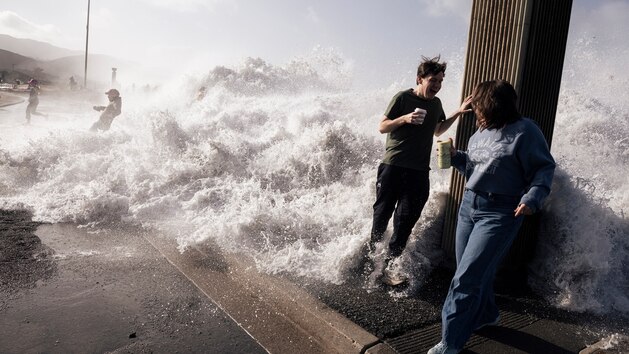
Much of the West Coast continues to face hazardous coastal conditions on Sunday, including 20- to 30-foot waves slamming waterfront communities.

Coastal impacts are expected Sunday along nearly the entire length of the West Coast, from Southern California to the Northwest states, as a series of storms fuel widespread dangerous rough surf.

The latest storm system has moved into the Pacific Northwest, bringing another round of rain and mountain snow from Northern California to Washington and Oregon.

But the primary concern on Sunday will be focused on the persistent rough surf and large waves across much of the West Coast amid back-to-back storms.

High surf alerts remained in effect on Sunday along much of the West Coast.

Dangerous, large breaking waves of 20 to 30 feet in height are expected to continue along the Northern California, Oregon and Washington coasts before easing on Monday.

The large waves will create hazardous conditions along the coast, with waves inundating beaches and potentially bringing significant beach erosion and damage.

Periods of rain along the Pacific Northwest Coast will spread inland across the Intermountain West and Northern California.  

Some of the highest elevations of the Cascade Mountains could see some snow as well.

Meanwhile, a new system is expected to bring more unsettled weather to the Pacific Northwest Coast by early Wednesday.


Heavy rain in southeast Texas


Widespread showers and storms are forecast across southeastern Texas on Sunday, with isolated downpours possible.

Localized flash flooding could develop where the heaviest rain moves through, including metropolitan Houston, Galveston and Freeport.

Rainfall totals of 1 to 2 inches are forecast across the region, with isolated amounts up to 4 inches possible through Sunday night.

Storms in southeast Texas are expected to bring heavy rain, with 1 to 2 inches possible across most of the region and some areas receiving 4 to 6 inches.

The weather system hitting southeast Texas is also bringing windy conditions along the coast, with gusts of up to 40 mph possible, leading authorities to warn residents about the potential of falling tree limbs and scattered power outages.


Copyright © 2026, ABC Audio. All rights reserved.