Please ensure Javascript is enabled for purposes of website accessibility
Trump administration files urgent appeal with Supreme Court over USPS mail-in ballot rules

Trump administration files urgent appeal with Supreme Court over USPS mail-in ballot rules


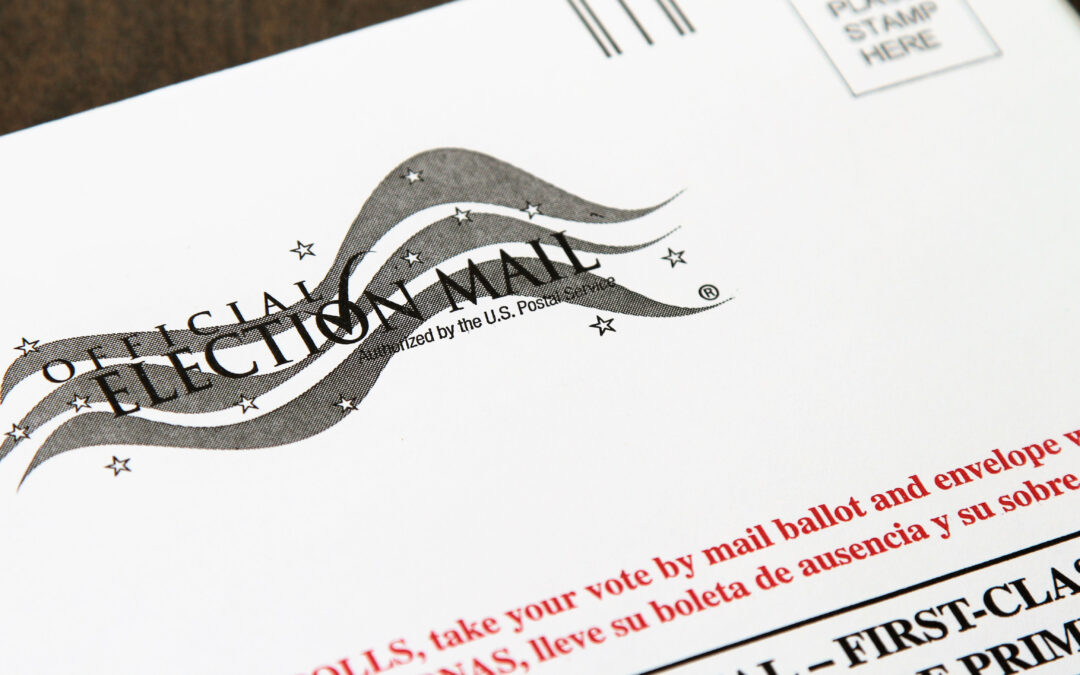
(WASHINGTON) — The Trump administration on Thursday filed an urgent appeal with the U.S. Supreme Court seeking permission to immediately implement new U.S. Postal Service rules for mail ballots that critics say impede on states’ authority to run elections. 

A temporary restraining order against the USPS rules, which were prompted by President Donald Trump’s executive order aimed at tightening access to mail ballots, is set to expire on Sept. 10 but could be extended indefinitely.  A federal district court judge is set to rule imminently. 

The new rules, published by USPS last month, require states to report basic voter information, such as a voter’s name and home address, attached to a unique barcode on every mail-in ballot distributed. Postal workers would then only deliver ballots addressed to voters who appear on the state-provided list. 

Following the publication of the regulations last month, dozens of Democratic state attorneys general sued the Trump administration after an earlier lawsuit was blocked by the Supreme Court, which said the challenge was premature since the regulations hadn’t been finalized.

In its latest appeal to the justices, the Trump administration insisted the rules impose only “modest” ballot design and review requirements on states and that a requirement to submit name, address, and barcode information of intended recipients is not onerous or intrusive. 

“The rule thus plainly does not seize control of states’ administration of elections — it simply imposes reasonable preparation requirements for certain election-related mail,” Solicitor General John Sauer wrote in the court filing.

“The rule’s regulation of the U.S. mail — not federal elections — is plainly constitutional,” he argued.

Sauer told the justices that the longer they wait to grant the administration’s request the more likely it is that some states may not be able to comply with the new rules before having their mail ballots printed for the fall election and, in turn, might deprive some voters of being able to receive a ballot delivered by USPS. 

The states challenging the USPS rule have until Tuesday, Sept. 8, at 10 a.m. to formally respond before the court makes a decision. 

The states and voter advocacy groups have argued that the new USPS regulations are an attempt by the Trump administration to federalize elections, which are historically and constitutionally managed by each state, and make it harder to vote by mail for everyday citizens. 

Copyright © 2026, ABC Audio. All rights reserved.

Excavation work on Trump’s ‘triumphal arch’ to begin over next 2 weeks, Interior secretary says

Excavation work on Trump’s ‘triumphal arch’ to begin over next 2 weeks, Interior secretary says


(WASHINGTON) — Excavation work for the construction of President Donald Trump’s proposed 250-foot “triumphal arch” will begin over the next two weeks, Interior Secretary Doug Burgum announced, despite the project not having final approval from a key agency.

“We are pleased to announce that after a very long wait (over 125 years!), we are preparing to start, over the next two-week period, the excavation work necessary for the Great Triumphal Arch and Military Observation Deck, at Memorial Circle on Columbia Island between the Lincoln Memorial and Arlington National Cemetery,” Burgum wrote in a social media post on Thursday.

“This will be one of the Great Pieces of American Architecture, honoring the history and significance of Arlington Cemetery and befitting the most powerful Capital in the World,” Burgum added.

Burgum’s announcement comes after a key agency gave initial approval to the plans and as the project continues to face a legal challenge.

In July, the National Capital Planning Commission (NCPC) voted to approve the preliminary site and building plans for the arch after hearing hours of public testimony against the project.

Ahead of that meeting NCPC agency staff recommended initial approval but also a series of revisions to the project to comply with the Height of Buildings Act. The century-old federal law restricts building heights in Washington, D.C., to preserve the city’s skyline.

The commission has not yet approved the final design for the arch.

Trump’s proposed arch would be more than twice as tall as the 99-foot Lincoln Memorial, and taller than France’s Arc de Triomphe.

Earlier this year, Commission of Fine Arts, another federal agency made up entirely of Trump appointees, also voted to give the project initial approval. 

The National Park Service plans to have construction take place 20 hours per day over the next two to three years, according to planning documents released by the Interior Department earlier this summer.

A group of Vietnam veterans sued over the arch earlier this year and are asking a federal judge to block the construction, arguing the arch would obstruct views of Arlington National Cemetery and can’t be built without congressional authorization.

The Trump administration has argued that a 100-year-old statute related to the building of the nearby Arlington Memorial Bridge authorizes construction of the arch. Department of Justice lawyers have also argued that the plaintiffs lack standing and that the lawsuit is premature. 

In recent court filings, both sides referenced the Supreme Court’s move earlier this week to allow continued construction of the White House ballroom — another of Trump’s key Washington projects.

In a filing Thursday, the Trump administration said the veterans’ claims are “indistinguishable” from the one rejected by the high court’s five-member majority earlier this week in the ballroom case, finding the National Trust for Historic Preservation likely lacked standing to sue.

“Plaintiffs’ personal and professional experiences cannot transform distaste for the arch and its proposed placement into concrete and particularized injuries required for Article III standing,” the Justice Department’s filing said.

The veterans argued their suit is different than the ballroom case.

“Plaintiffs’ injury is not based on the construction of something that gives them offense but rather on the destruction of a landscape that they regularly visit and that holds profound personal significance for each of them in its present state,” the veterans’ filing argues.

In April, U.S. District Court Judge Tanya Chutkan, who is hearing the case, ordered that the Trump administration must provide the court with 14 days’ notice before any construction on the arch can begin. 

Copyright © 2026, ABC Audio. All rights reserved.
Billionaire Leon Black sues House Oversight Committee over subpoena in Epstein probe

Billionaire Leon Black sues House Oversight Committee over subpoena in Epstein probe


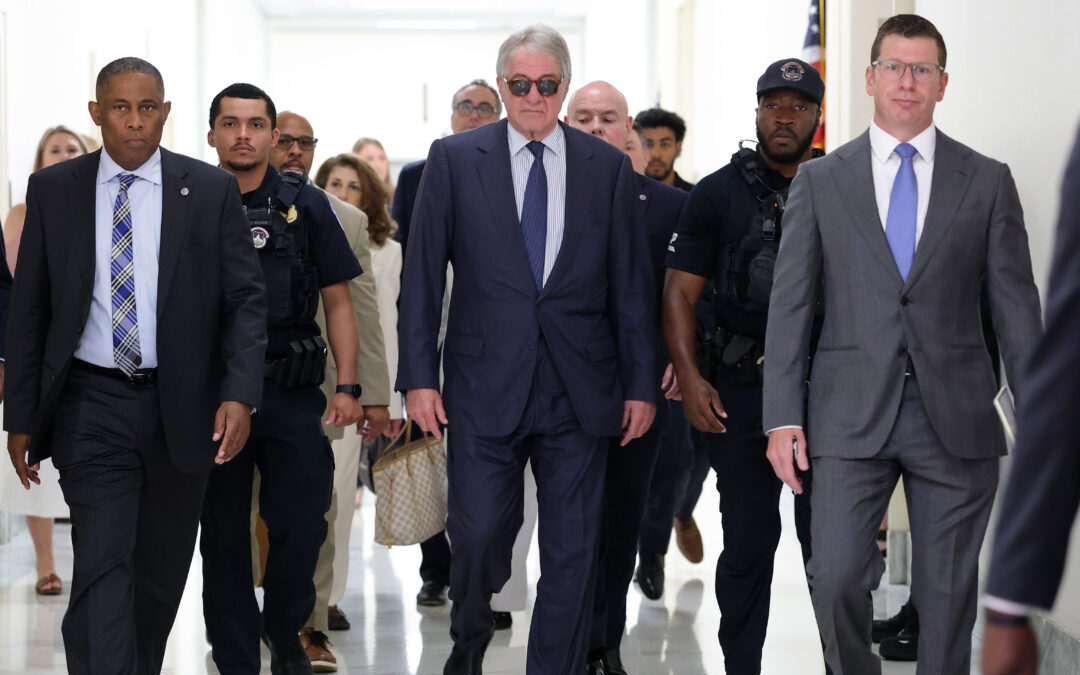
(WASHINGTON) — Private equity billionaire Leon Black filed a lawsuit Thursday in federal court against the House Oversight Committee and Chairman James Comer before failing to appear under subpoena for a deposition under oath before the panel as part of its probe into the government’s investigation of convicted sex offender Jeffrey Epstein. 

After Black filed the suit and failed to appear for the deposition, Comer signaled that the committee may move to hold Black in contempt of Congress — but said he wants to gain consensus and examine the legal path ahead before proceeding.

“This is unacceptable,” Comer, R-Ky., said. “We’re very disappointed. I don’t think I need to tell anyone in here how important of a witness Mr. Black is to this investigation. So we’re going to huddle up as a committee and talk about next steps with respect to Mr. Black, and we’ll go from there.”

“I would hold him in contempt right now,” Comer added. “Of all the powerful billionaires and political people we brought in for interviews and depositions, this is the first time anyone’s filed suit. I don’t want to do anything to harm our chances in court.”

In June, the panel issued subpoenas to Black after he appeared for a transcribed interview and refused to answer questions. The subpoenas called for his appearance for a deposition, as well as the production of purported nondisclosure agreements that Epstein survivors have discussed with committee investigators.

Black’s lawsuit, filed in the U.S. District Court for the District of Columbia, asserts the subpoenas are “invalid to the extent they exceed OGR’s delegated authority in seeking private information that bears no legitimate connection to OGR’s legislative purpose.”

Black’s attorneys also contend that the subpoenas would also “expose women who value their privacy,” who have no known or public connection to Epstein — while contending that the committee lacks statutory authority to enforce its subpoenas in federal court.

Black is seeking declaratory and injunctive relief preventing the committee from compelling compliance with the subpoenas.

“The Committee is on a fishing expedition that oversteps its authority and completely ignores its responsibility,” said Black’s attorney, Susan Estrich. “This is no longer about finding the truth about Epstein. It is about trying to destroy Mr. Black. We were left with no choice but to file this lawsuit in response to an abuse of Congressional power.”

Black, who maintained a social relationship with Epstein since the mid-1990s and eventually paid him more than $170 million for “tax and estate planning advice,” according to the Senate Finance Committee, appeared in June before the Oversight panel as part of its ongoing Epstein probe.

Black has denied wrongdoing or knowledge of Epstein’s crimes, though his financial payments to Epstein served as a lifeline to the convicted sex offender in the years after Epstein’s 2008 prison sentence for soliciting a minor for prostitution.

With time running short on the 119th Congress, Comer and Rep. Robert Garcia, the ranking Democrat on the Oversight Committee, both believe Black is trying to run out the clock — complicating the committee’s effort to conclude its investigation before the end of the 119th Congress. 

“Obviously, we’re running up against the clock at the end of this Congress, I’m sure his legal team knows that. So we’ve got to be smart from here on in,” Comer said.

“What he’s trying to do is to slow the process down of getting us the information,” Garcia, D-Calif., said. “He’s very aware that Comer no longer is going to be the chairperson. But what Mr. Black should understand is that we will be even more aggressive than Chairman Comer as it relates to his testimony.”

“Leon Black provided over $180 million to Jeffrey Epstein. $180 million, and he has yet to tell the committee or the public as to exactly what that funded and why he did it,” Garcia said. 

Copyright © 2026, ABC Audio. All rights reserved.
Speaker Johnson, in reversal, cancels House votes, leaving few days in session before midterms

Speaker Johnson, in reversal, cancels House votes, leaving few days in session before midterms


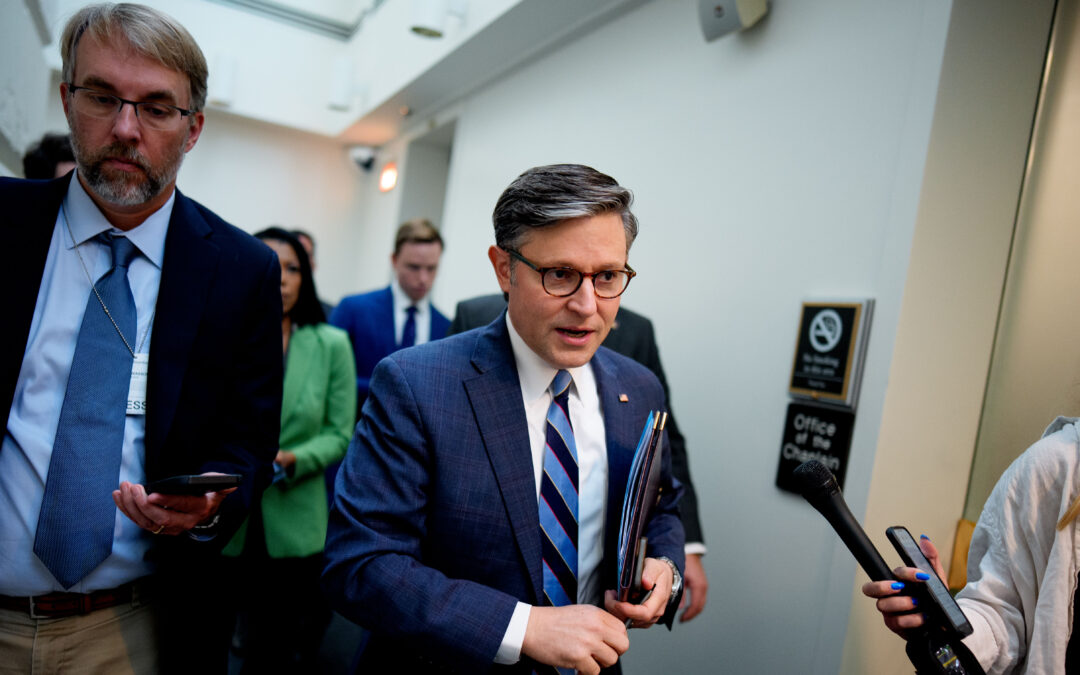
(WASHINGTON) — With government funding in the rear view, the House on Thursday canceled votes for the last two weeks of September, leaving just four days of legislative business before the Nov. 3 midterm elections — a reversal from Speaker Mike Johnson’s comments on the matter earlier this week.

After a vote series Friday morning, lawmakers will fly home for a district work period over the Labor Day holiday, as well as the Republican Midterm Convention in Dallas, Texas.

The House is scheduled to return on Sept. 14 for four days of legislative business — leaving on Sept. 17 for six full weeks of campaigning ahead of the midterm elections.

The sparse floor schedule is not particularly unusual for an election year — but is a reversal of Johnson’s position earlier this week when he told reporters that he did not intend to cancel any scheduled legislative business this month.

“Republicans are here to work,” Johnson told reporters on Tuesday when pressed if GOP Rep. Thomas Massie’s prediction of a schedule change might come to fruition. “We have a schedule, a calendar that’s been out for a year. We are abiding by that calendar. We are going to work all the way through September and every day that’s on the calendar, so long as people like him don’t stop the progress.”

But earlier this week, the House passed government funding through Dec. 11 — clearing the speaker’s top legislative priority ahead of the election.

Lawmakers will return again for a lame duck session on Nov. 9 — scheduling five more weeks of legislative business before the end of the 119th Congress.

Copyright © 2026, ABC Audio. All rights reserved.
Trump $1 coins in circulation, US Mint says

Trump $1 coins in circulation, US Mint says


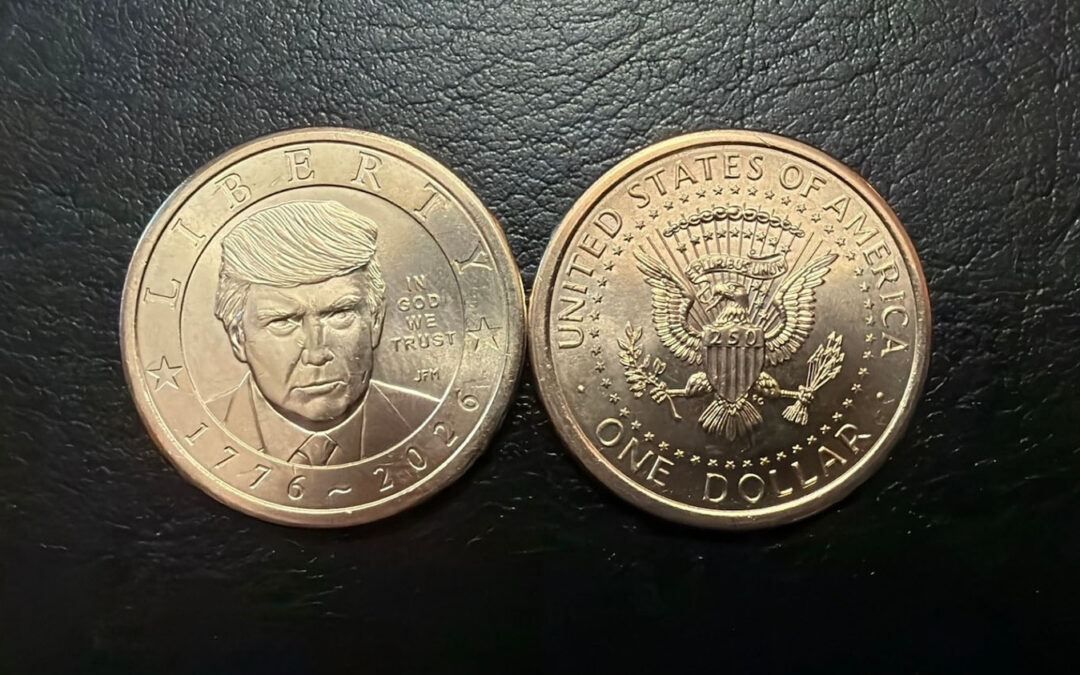
(WASHINGTON) — The U.S. Mint announced Wednesday that $1 coins featuring President Donald Trump’s likeness have entered circulation and can be purchased on its website — a historic and controversial move for a living president that has not been done in 100 years.

In addition to the president’s portrait, the U.S. Mint said the coins commemorate the 250th anniversary of the signing of the Declaration of Independence, with inscriptions “1776 ~ 2026,” “LIBERTY” and “IN GOD WE TRUST.”

The rolls of $1 coins (25 to a roll) go for $61. A bag of 100 coins goes for $154.50, according to the Mint’s website. The coins can be used as legal tender.

“These coins are also in circulation, so check your pocket change. Collect them today!” the U.S. Mint wrote in a social media post Wednesday.

The coins are not real gold, but feature a gold-colored finish made of manganese brass. They were produced at the Philadelphia Mint, according to the Mint. It’s not clear how many coins were produced.

The Mint said 250,000 of the coins have a special “July 4th” markings, which were randomly included in the rolls and bags, and were struck on July Fourth at the Philadelphia Mint, according to the Mint’s website.

While living presidents are generally barred from appearing on U.S. currency, the Trump administration has argued that the Circulating Collectible Coin Redesign Act of 2020 permits the design because it authorizes the Treasury secretary to oversee the minting of special coins for the nation’s Semiquincentennial. And while the same law bars any person from appearing on the tail side of a coin, the restriction doesn’t apply to its face — which is where Trump’s likeness appears on the new $1 coin.

The last and only time a living president was featured on hard currency struck by the U.S. Mint was a century ago for the U.S. Sesquicentennial. The silver half-dollar coin featured then-President Calvin Coolidge silhouetted behind the bust of President George Washington. At the time, the Mint produced a million of the coins with 860,000 of them ultimately returned and melted due to low demand.

The legality of the Trump coin’s production has come into question after Treasury Secretary Scott Bessent failed to have the coin reviewed by the bipartisan Citizens Coinage Advisory Committee, an 11-person body established by Congress to advise the secretary on designs of hard currency, according to members of the committee.

The Treasury pushed back on the criticism, saying that it offered the committee “multiple reasonable opportunities to review proposed designs” but that it declined.

“Accordingly, the Mint’s statutory obligation to seek CCAC review has been fulfilled,” U.S. Treasurer Brandon Beach wrote in a statement in March, adding that Bessent has “sole discretion on final design selection.”

There is currently a household order limit of two items that will remain in place until 2 p.m. ET on Sept. 3, according to the U.S. Mint.

Copyright © 2026, ABC Audio. All rights reserved.
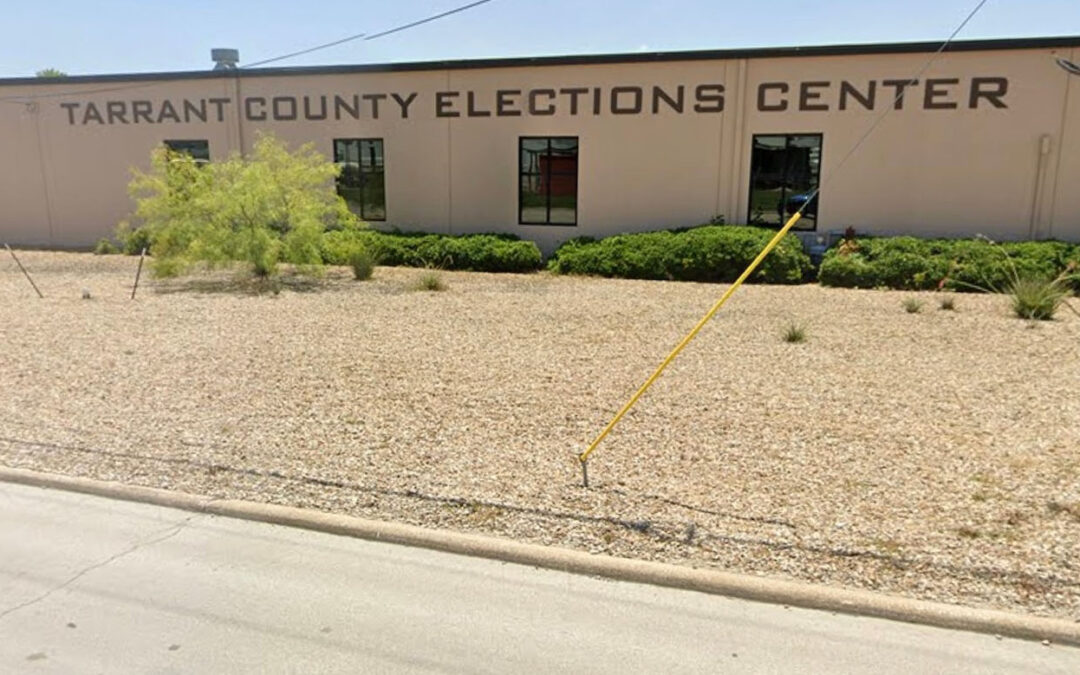
Amid public outcry, Tarrant County, Texas, cuts polling locations ahead of 2026 midterm elections

Amid public outcry, Tarrant County, Texas, cuts polling locations ahead of 2026 midterm elections


(WASHINGTON) — Officials in Texas’ third most populous county voted on Tuesday to reduce polling locations by 92.

The move will see Tarrant County’s voting sites reduced from 316 in the 2022 midterm elections to 224 for this year’s elections.

Tuesday’s vote took place during a meeting of the five-member Commissioner’s Court, which is the governing body of the county.

It came amid public outcry from dozens of residents opposing the measure during public meetings over the past month.

“People have fought and died for the right to vote,” Tarrant County resident Catherine Godby said.

She said it’s “wrong to suppress” the right to vote.

“You’re on the wrong side of history,” she said. “You’re dishonoring what it means to be an American, and more than that, you’re losing your humanity.”

Democratic commissioners Alisa Simmons and Rodrick Miles Jr. voted against the cuts, while the Republicans on the court — County Judge Tim O’Hare and commissioners Matt Krause and Manny Ramirez — voted for the proposal.

The vote on Tuesday came a year after the board approved a proposal that cut nearly half of all early voting locations in the county ahead of 2025 election, according to Dallas ABC station WFAA.

Republicans in favor of the measure argued that the number of polling locations after the cuts would still meet the mandatory minimum. They also cited efforts to cut costs, citing low voter turnout at various polling locations.

O’Hare, who vote for the measure, told ABC News in a statement on Monday that under the new proposal, there will still be 54 polling places that exceed the statutory minimum for Election Day.

“The updated plan averages 2.85 miles between early voting locations and 1.56 miles between Election Day polling locations. All of this is accomplished without the wasteful practice of placing polling sites directly across the street from one another,” O’Hare said.

The county judge said “some locations changed for practical reasons,” including some buildings no longer operating and some not meeting Americans with Disabilities Act requirements.

“State law also requires early voting equipment to be stored in a locked room,” he added. “Those are legislative requirements, and this county follows them. Every voter deserves a safe, accessible location with secure equipment, and this plan does that.”

Miles, one of Democratic commissioners, told ABC News in a statement on Monday that he intends to oppose the proposal because it reduces polling locations overall.

“Our population hasn’t shrunk. Our electorate hasn’t shrunk. I need a clear, convincing explanation for why a growing county is providing meaningfully fewer places to vote and I haven’t gotten one yet,” he said.

“Our job isn’t to calculate the fewest locations we can legally operate. It’s to make sure every eligible resident has a fair and meaningful opportunity to vote. The legal minimum cannot become the moral standard,” he added.

Tarrant County, which is in the Dallas-Fort Worth area, has more than 2.2 million residents, according to the U.S. Census Bureau, and 1.3 million registered voters, county data shows.

The county, which has a growing Hispanic population, is about 40% white, 31% Hispanic and Latino, 19% Black and 7% Asian, the 2025 U.S. Census numbers show.

“The minimum is never my standard, and it should not be a standard of a county this size,” Simmons, who voted against the proposal, said during a press conference on Sunday.

Texas state Rep. James Talarico, the Democratic candidate for U.S. Senate running against Republican Texas Attorney General Ken Paxton, also expressed opposition to the proposal during the press conference on Sunday.

“It’s nearly a third of the polling locations in Tarrant County, and that means on election day there will be longer commutes, longer lines and lower voter turnout, especially in our Black and brown communities,” he said.

Krause, who voted for the proposal, pushed back on the argument that reducing voting locations would suppress the vote, telling ABC News in a statement on Monday that the new proposal “unequivocally” gives all of the county’s registered voters the opportunity to exercise their Democratic right.

“There are voting locations within close proximity to most everyone in Tarrant County,” he added.

Copyright © 2026, ABC Audio. All rights reserved.