Please ensure Javascript is enabled for purposes of website accessibility
‘Dune’ films to return to theaters with ‘Dune: Part Three’ sneak peek

‘Dune’ films to return to theaters with ‘Dune: Part Three’ sneak peek


It’s time to return to Arrakis.

The first two films in director Denis Villeneuve’s Dune franchise are being rereleased in theaters in November. This return to theaters will include a sneak peek at the upcoming Dune: Part Three.

Both films will arrive as a double feature on IMAX screens on Nov. 13 only. Additional showtimes of each of the films individually will be available Nov. 14 through Nov. 18.

Dune: Part Three opens in theaters and on IMAX screens everywhere on Dec. 18.

Villeneuve directed and wrote the script alongside Brian K. Vaughan for the third and final film in his Dune trilogy, based on Frank Herbert’s novel Dune Messiah.

Timothée Chalamet stars as Paul Atreides in the film, which also stars Zendaya, Robert Pattinson, Jason Momoa, Florence Pugh and Isaach De Bankolé. Charlotte Rampling, Anya Taylor-Joy and Javier Bardem appear in the ensemble alongside newcomers Nakoa-Wolf Momoa and Ida Brooke.

The new movie is set almost two decades after Paul Arteries took control of the Imperium.

“Now a ruthless Emperor, Paul must face the consequences of his reign as old allies return, terrifying new threats emerge, and betrayal lurks in every shadow. Haunted by visions of Imperial collapse and the reappearance of his long-lost love, Paul is drawn into a sweeping conspiracy, with Chani at the heart of its unfolding mystery,” according to the film’s official description. “As rebellion brews and enemies close in, Paul must confront the true cost of power and the fate of those he loves the most.”

If you’re headed to an AMC theater to see Dune: Part Three, you can get your hands on two brand-new popcorn bucket designs. The cinema chain has announced new buckets based on the viral sandworm-inspired one that went viral in 2024.

Called the Sandworm Thumper and the Double Sandworm, these collectable buckets include features like a working Thumper design, which is the device from the film used by Freman to pound the desert sand and attract giant sandworms, as well as multiple Shai-Hulud, which AMC says makes “it easier to share popcorn.”

“An epic conclusion calls for legendary collectibles. See DUNE: PART THREE and seize control of your collection, including AMC Theatres exclusives,” according to AMC’s Instagram.

Copyright © 2026, ABC Audio. All rights reserved.

Ranked choice voting explained as voters in 2 states rank congressional picks

Ranked choice voting explained as voters in 2 states rank congressional picks


As power in Congress hangs in the balance, all eyes will be on the two crucial states where races will be decided by a voting method that’s no different than listing your top ice cream flavors.

Ranked choice voting (RCV) will be used in the congressional and state races in Maine and Alaska again this year. People in those states will have the opportunity to have their ballot count towards the person with the majority of votes, even if they strongly prefer a third party candidate.

Under RCV rules, voters rank their candidates in order of preference, first, second third, etc. If no candidate gets a majority of No. 1 rankings, votes are transferred from the candidate with the least top rankings to the other candidates based on who was ranked second, third and so on.

“The thinking is that even if my favorite candidate has no chance of winning, I can put my support and vote for someone who I also think is good,” Ismar Volić, the director for the Institute for Mathematics and Democracy at Wellesley College who has been researching RCV for years, told ABC News.

Although the system has been in place in Maine since 2018 and in Alaska for the last four years, it has generated huge debates over its effectiveness and learning curve.

Opposition from elected officials has risen over the last few years, with 19 states banning the practice. Voters in Alaska will decide in a ballot question if they will join that list on Nov. 3.

Volić and other political and mathematical researchers stressed that as this debate continues across electorates, it is essential to look at the pros and cons of RCV and how it addresses the concerns from voters.

How it works

Unlike standard voting, where people are mandated to choose one candidate on their ballot, RCV asks the electorate to rank the candidates in order of preference. Voters can choose to only rank one candidate on their ballot.

If one of the candidates gets more than 50% of the No. 1 rankings, they win the election.

If no candidate gets more than 50%, the race goes into an instant runoff.

In that scenario, the ballots are re-examined and the candidates with the fewest No. 1 rankings are eliminated. The votes from those eliminated candidates are then transferred to the candidate that the voter ranked as No. 2 on their ballot.

If the voter did not rank more than one candidate and only chose the eliminated person, their votes are not transferred. Their ballot is still valid, however, and their vote for the eliminated candidate is still recorded.

If no candidate gets more than 50% of the vote after the elimination and vote transfer, the process restarts and continues until one candidate gets the majority.

Electorates that use the system tally the votes with computer programs. This usually happens quickly, with most tallying the runoff rounds that night.

How has RCV affected elections

David McCune, a professor of mathematics at William Jewell College who has researched RCV for a decade, told ABC News that the biggest effect of the voting method is the diminishing role of a spoiler candidate.

For example, in the 2014 Maine governor’s race Republican Paul LePage won with under 50% of the vote in a race among LePage, Democrat Mike Michaud and independent candidate Eliot Cutler.

With RCV, voters who choose a third-party candidate as their top choice can also rank another candidate who aligns with their views and thus ultimately help select a candidate who represents their beliefs, according to McCune. The end result is a victor who represents a bigger majority of the electorate, he said.

“The evidence points to the fact that elections become more competitive when you switch to RCV,” McCune told ABC News.

David Kimball, a professor of political science at the University of Missouri at St. Louis who has studied RCV, told ABC News that candidates have also changed their campaign tactics, to shore up all of those no. 2 and no. 3 rankings.

Mudslinging and negativity end up hurting a candidate in a RCV race as it turns voters off, according to Kimball.

He pointed to the 2025 New York Democratic mayoral primary where then-State Assemblyman Zohran Mamdani and then-City Comptroller Brad Lander crossed endorsed each other and encouraged their supporters to rank the other candidate second on their ballots.

In the final round of RCV tallying, Mamdani received the majority of Lander’s 120,634 transfer votes that he accumulated before he was eliminated and went on to beat former Gov. Andrew Cuomo by more than 130,000 votes, according to election data.

“It can only help your candidate if they are seeking second or third choice endorsements,” Kimball said.

Volić noted that while RCV does minimize the effect of a spoiler candidate, it does not outright eliminate them. He noted the 2022 special election for Alaska’s sole congressional seat where former Gov. Sarah Palin was up against Democrat Mary Peltola and Republican Nick Begich.

Palin ended up splitting the first-round votes and, even though she received more of Beich’s transfer votes, Peltola edged out to surpass the 50% threshold and won the election.

“This type of spoiler event is very rare in RCV,” Volić, who has analyzed data from over 1,000 RCV U.S. elections, said.

The researchers noted that Begich went on to win the seat in 2024 election, after he beat Peltola in the third round of RCV runoffs.

Volić warned that the polarization in current politics has led to more misinformation and misunderstandings about the system.

Where it’s used, where it’s banned

As of October 2026, approximately 10.3 million voters in 14 cities and Maine and Alaska use RCV for their elections, according to data from The Ranked Choice Voting Resource Center, a non-partisan non profit that provides resources on RCV.

In this year’s midterms, roughly 3.9 million voters will cast a RCV ballot for congressional, state and local elections, according to the center.

Maine voters adopted RCV for their congressional races in a state referendum in 2018, two years after a similar referendum passed for Maine’s state elections. Alaska voters adopted RCV for local, state and federal races in the 2020 election. 

Since Alaska made the change, however, some states have passed measures that have banned RCV. Eighteen state legislatures, including Alabama, Florida and Ohio, passed laws that banned the process between 2022 and 2026. Voters in Missouri passed a ballot measure to ban the process in 2024.

McCune said RCV’s role in major elections, such as last year’s New York City Democratic primary and the 2022 Alaska special election, has sparked the conversations but a lot of the details of the method are getting lost in the discussion.

“The problem is because of the polarization in politics… the pros and cons of RCV aren’t being emphasized by politicians,” McCune said.

RCV’s fate in Alaska

In 2024, a ballot initiative championed by state Republicans was given to voters asking them to repeal RCV. The measure lost by just 743 votes, or 0.24 percentage points of the total vote, according to election data.

A similar measure has been put in place for this year’s election and various Republican leaders, including Begich and Alaska Gov. Mike Dunleavy, have publicly pushed for its repeal.

Their calls have been amplified by President Donald Trump.

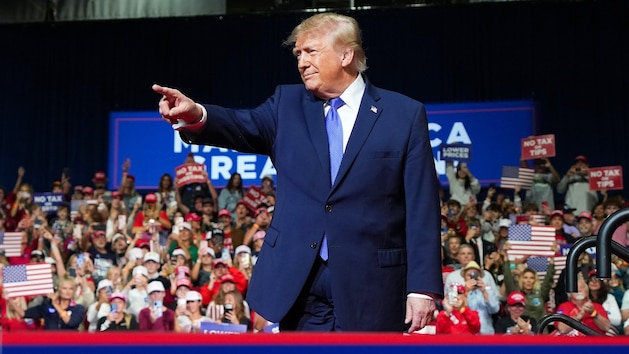
“We have the Corrupt Ranked Choice System of Voting, which shouldn’t be allowed in our Country and will, hopefully, be repealed in the November Vote,” he said in an Oct. 8 social media post.

Trump claimed, without evidence, that the system is a “Democrat scam” during an Oct. 14 rally in Alaska and insinuated that it’s a “way to cheat.”

There is no evidence in any U.S. RCV election that shows that the system benefited one party over another, according to election data compiled and analyzed by Volić and McCune.

McCune said there are examples where one candidate would have won an election through standard plurality voting with a lower percentage of the total vote, but that only because of a split ticket by an independent candidate.

“For example, in Maine you would often see one Republican, one Democrat and one independent on the ticket but the independent was close to the Democrat ideologically,” he said. “In a ranked choice election, those votes for the independent would likely transfer to the Democrat. That same dynamic plays out in other places where an independent candidate was closer to Republican ideologically.”

The researchers said that polarization has stymied RCV research and the public’s understanding, but they stressed that voters should focus on the mechanics of the system while forming an opinion.

“When you design a voting system, you want to design it to make sure it incentivizes voters to cast their true opinion,” McCune said. “And you want your opinion to be supported with the facts.”

Copyright © 2026, ABC Audio. All rights reserved.

Voters weigh citizenship amendments as Trump fans fears of noncitizen election fraud

Voters weigh citizenship amendments as Trump fans fears of noncitizen election fraud


Voters in six states on Nov. 3 will decide whether to approve ballot measures that would amend their state constitutions or state law to make U.S. citizenship a requirement for voting.

The closely watched popular referenda reflect a push by President Donald Trump to crackdown on noncitizen voting based on unsubstantiated claims of widespread voter fraud.

Voting-rights advocates warn they also raise the potential of sidelining millions of eligible American voters. 

“Rather than strengthening democracy, [the amendments are] a political maneuver designed to justify future rollbacks of voting rights,” said Rashane Hamby with the ACLU of Kansas in testimony last year.

Federal and state laws already prohibit noncitizens from voting in any federal or statewide election, but advocates for the constitutional amendments say even more protection is needed. 

“Law can change, as we know,” said West Virginia state Sen. Patricia Rucker, a Republican, at a press conference last month. “This proposed amendment would ensure that no future legislature could just simply change the election law with only a bill.”

No state constitution currently includes a citizenship requirement for voting. Five states — Arizona, Arkansas, Kansas, South Dakota and West Virginia — have amendments on the ballot. An Alaska initiative would create a new state law.

Of particular concern to some supporters: major cities in three states plus the District of Columbia that do allow some noncitizens to lawfully participate in local elections.

“There’s nothing that magically stops those bad ideas at that state’s borders,” said Arkansas state Rep. David Ray in a news conference last month.

Many civil rights groups and nonpartisan voter advocates fear the measures — and accompanying regulations requiring proof of citizenship to register to vote — could disenfranchise tens of millions of Americans.

Jemmie Lolita Pepper of Indiana, a former public-school educator who was born on U.S. soil but spent decades unable to prove it, says she empathizes with both sides of the debate. 

“I understand the desire to require proof so there won’t be voter fraud or anything like that. I truly support that: no voter fraud,” said Pepper, 63, in an interview. “But for those of us who had to live years of not having [any documentation], you couldn’t prove it. I couldn’t.”

With pro bono legal help, Pepper recently untangled a series of clerical errors in state records — including a misspelling of her first name and faulty substitution of her last name — that had prevented her from obtaining an official government ID and, in turn, casting a ballot. She now has one.

“They had my name listed as the boys’ spelling, J-I-M-M-I-E,” Pepper recalled of her legal odyssey. “I said, ‘Well that’s still me. That’s still me.'”

An estimated 21.3 million Americans — or 9% of all eligible voters — are unable to readily present documentation proving they are citizens because of misplaced or inaccessible records, financial hardship putting replacement fees out of reach, name changes from divorce or remarriage, and clerical errors in state databases, according to a 2025 study by the University of Maryland. 

Only 48% of Americans have a valid passport as of 2023, according to the State Department.

Some voting-rights advocates say a proof-of-citizenship requirement would hit elderly, disabled and rural voters particularly hard.

“I’ve been through SCUD missiles, riots, sniper fire. To be unable to keep it together navigating all these processes makes me ashamed to say, but it would be really difficult,” said Symmone Ford of Michigan, a 56-year-old Gulf War veteran with severe PTSD who has difficulty leaving her home.

“I can’t afford the money for a lawyer to change my name. I barely have enough to pay my bills,” said Ford, whose last name does not currently match her birth certificate because of several marriages and divorces.

Additional paperwork requirements for voter registration could effectively shut down online access, some experts said. Even when people do have proper documentation, many may lack access to copiers, notaries and scanners to submit electronically. 

Nine states currently have laws requiring state officials to verify a voter’s citizenship status either by looking at documentary proof at time of registration, reviewing voter registration history, or cross-checking with other government databases, according to the National Conference of State Legislatures. 

Federal law requires voters in all states to attest with a signature — under threat of imprisonment — that they are, in fact, U.S. citizens when they sign up for a ballot.

Still, 83% of Americans, according to Gallup, say people registering to vote for the first time should have to provide documentation to show that they are eligible citizens.

Efforts by Trump and his Republican allies to institute a nationwide proof-of-citizenship standard stalled in Congress earlier this year and later got blocked by federal courts when he attempted to impose it by executive order. 

An online tracker of major public claims of noncitizen voting compiled by the nonpartisan Center for Election Innovation and Research shows cases of noncitizen voting are extremely rare.

In Michigan, for example, the state attorney general identified 38 credible cases of noncitizen voting in the 2024 general election out of roughly 5.7 million votes cast. That’s 0.0000066% of total votes cast. 

Six of the Michigan cases have resulted in criminal charges, while 10 were closed without charges and 22 are still under review, according to state officials. 

Eighteen states did not publicly disclose finding or removing any noncitizen from a voter registration list in the 2024 election, and no state uncovered any coordinated effort to get noncitizens to vote, according to CEIR records. 

President Trump and the Department of Justice continue to push unsubstantiated claims of widespread noncitizen voting as the basis for tighter voter registration rules and ballot segregation in several states, including California and Washington.  

The U.S. Supreme Court has previously struck down efforts to add a proof-of-citizenship requirement to federal voter registration forms. Later this year, in a major case from Arizona, the justices will decide whether states can mandate proof-of-citizenship on state forms and for voting in state races. 

Copyright © 2026, ABC Audio. All rights reserved.

Judge hears arguments over James Comey’s request to throw out latest DOJ allegations against him

Judge hears arguments over James Comey’s request to throw out latest DOJ allegations against him


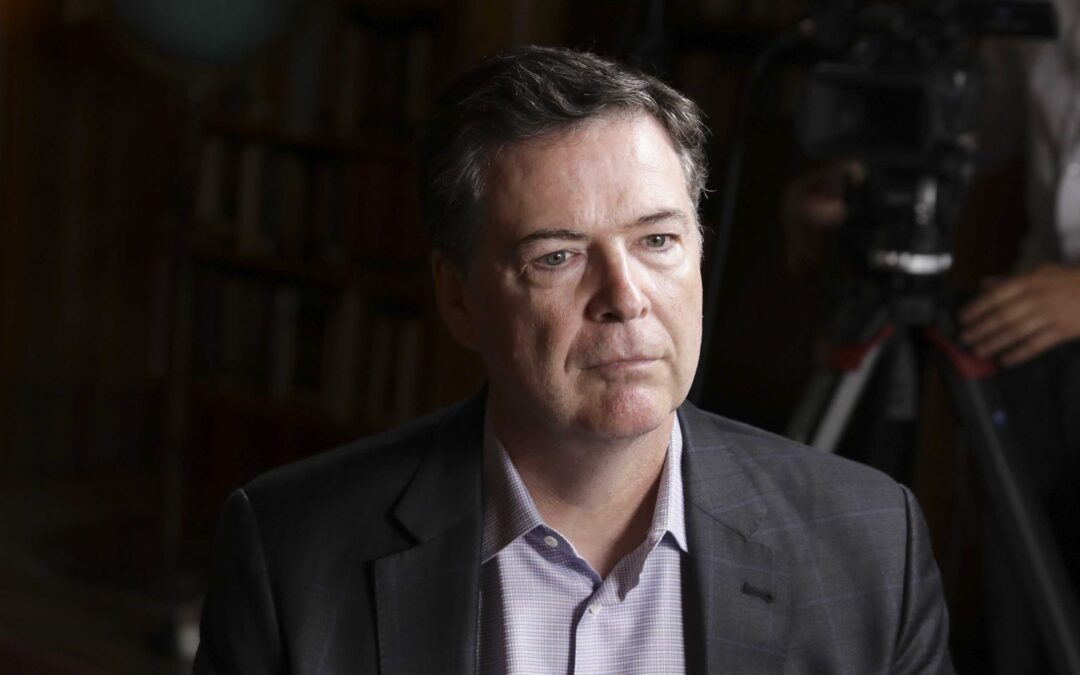
A federal judge on Friday did not immediately rule on a request from attorneys for former FBI Director James Comey to throw out criminal allegations put forward by the Justice Department accusing him of allegedly mishandling classified information more than a decade ago. 

It’s the third known effort by federal prosecutors to attempt to bring charges against Comey in the span of 13 months, after President Donald Trump issued a public demand for the Justice Department to act “now” to bring prosecutions against Comey and other perceived political foes.

U.S. District Judge Trevor McFadden heard arguments for nearly two hours over whether the government improperly sought to extend the statute of limitations so they could charge Comey by filing a “criminal information” rather than an indictment, which requires sign-off from a grand jury. 

At one point in the arguments, the judge addressed the Justice Department’s recent difficulties in convincing grand juries to approve charges in a growing number of cases, despite that previously being extraordinarily rare. 

“Turns out ham sandwiches are harder to indict these days,” Judge McFadden said, referring to New York Judge Sol Wachtler’s famous 1985 quote regarding how easy indictments are to attain.

It was unclear by the conclusion of the hearing whether McFadden would issue a ruling by next Thursday, which would technically be the last day for the government to seek a grand jury indictment against Comey, until the criminal information is dismissed under the Speedy Trial Act. 

But DOJ attorney Dustin Farahnak said that, as part of the government’s active investigation, it has since uncovered evidence that could be included in the case as recently as April of 2017 — which, if true, would extend the government’s ability to potentially charge Comey for another six months. 

Before concluding the hearing McFadden cautioned to the government, saying he “will be extremely frustrated if there is some dawn raid” to arrest Comey, prompting Farahnak to assure him “that won’t happen.”

Earlier in the hearing, Comey’s attorneys said there have been several recent instances where FBI agents have been parked outside Comey’s home for unexplained reasons, raising the suggestion that he could face arrest at any moment. 

The latest allegations against Comey were revealed Monday after McFadden ordered details of the behind-the-scenes legal fight to be unsealed at the request of Comey’s legal team.

According to unsealed court records, prosecutors allege that Comey broke the law by directing FBI staff to leak information to a New York Times reporter for an article published on Oct. 5, 2016, titled “Yahoo Said to Have Aided U.S. Email Surveillance by Adapting Spam Filter.”

“The United States’ investigation has uncovered evidence that former FBI Director, James B. Comey, sought to correct misinformation which had appeared in the press by way of Reuters the day before,” prosecutors wrote in their response to Comey’s motion to dismiss the case earlier this month. “Mr. Comey directed staff to speak to [the New York Times reporter] about specific accuracy concerns related to the Reuters article, and thereby illegally transferred classified information.”

The article in question centered on whether the Department of Justice sought a court order from the Foreign Intelligence Surveillance Court to force Yahoo to search for communications between members of a foreign terrorist organization.

According to court filings, Comey sought to correct claims in a Reuters story published the previous day that Yahoo “secretly built a custom software program to search all of its customers’ incoming emails for specific information provided by U.S. intelligence officials.”

Comey was indicted in North Carolina on April 28 over a controversial Instagram post from last year that prosecutors say was a threat against the president. In the post, Comey shared a picture showing the numbers “86 47” — interpreted to mean “get rid of” Trump — written in seashells on the beach, with the caption, “Cool shell formation on my beach walk.”

Comey removed the post soon after making it, saying, “I didn’t realize some folks associate those numbers with violence. It never occurred to me but I oppose violence of any kind so I took the post down.” His next court appearance in that case is scheduled for January.

The former FBI director was previously indicted in September 2025 on charges of making a false statement and obstruction related to his testimony before the Senate Judiciary Committee in 2020.

Comey pleaded not guilty at his arraignment and the case was ultimately dismissed on the grounds that the Trump-appointed U.S. attorney who brought the case was improperly appointed.

Copyright © 2026, ABC Audio. All rights reserved.

Peltola denies knowledge of ‘any other candidate’ on Alaska Senate ballot besides herself and incumbent Dan Sullivan

Peltola denies knowledge of ‘any other candidate’ on Alaska Senate ballot besides herself and incumbent Dan Sullivan


Alaska Democratic Senate candidate Mary Peltola denied that she knew about an effort to recruit a candidate to be on the Alaska ballot with the same name as the Republican incumbent, Sen. Dan Sullivan.

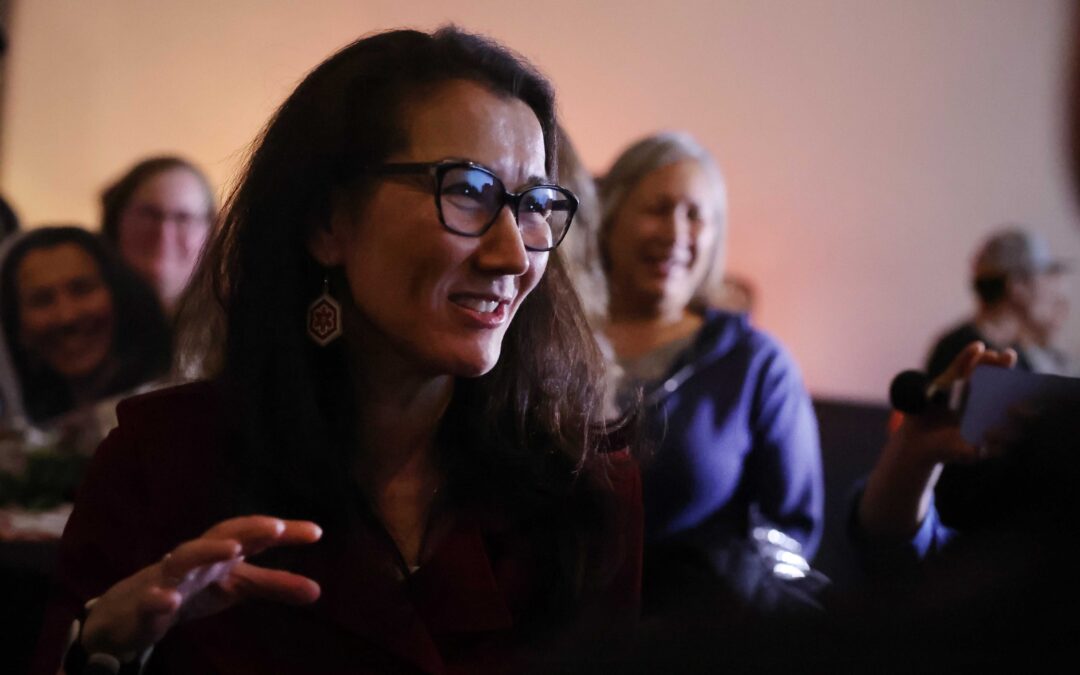
“I just want to clear the air. I knew nothing about any other candidates on the ballot except for me and the incumbent. That is all I have ever known about,” Peltola said during a rally in Juneau, Alaska, on Thursday, according to an Associated Press video.

ABC News has asked the Peltola campaign to clarify whether she is denying knowledge of the reported recruitment effort to find a spoiler candidate.

Peltola later added, “I am not interested in tricking voters. I know I can beat Dan Sullivan.”

Peltola’s comments, just days before the high-stakes midterm elections, come after a New York Times report Wednesday that her campaign and senior aides at the Democratic Senatorial Campaign Committee played a role in recruiting Dan J. Sullivan — a Republican who almost has the same name as incumbent Sen. Sullivan — as part of an effort to sow confusion and ultimately benefit Peltola’s campaign.

At a separate campaign event on Thursday, Peltola called the New York Times’ report “just another distraction.”

“It’s another diversion. Every day, it’s some new, you know, ‘look over here’ moment,” Peltola said in a social media video verified by ABC News.

Peltola’s campaign earlier this week told ABC News that it “has no involvement with either Sullivan campaign.” Former Peltola staffer Elisa Rios told the Times about the reported recruitment effort, saying Peltola wasn’t directly involved but that she was “definitely aware.”

ABC News reached out to Dan J. Sullivan’s campaign for comment on the New York Times’ report earlier this week, but has not heard back.

Alaska courts evaluated the dispute over Dan J. Sullivan’s candidacy and found nothing illegal about his bid to be on the ballot — even if it was not entirely in “good faith” or an attempt to “confuse and mislead” as the Trump administration and Republicans contend. 

On Friday morning, President Donald Trump, who has claimed Pelota has committed “election fraud,” said Alaskans would need to have a “190 IQ” to understand the ballot with two Dan Sullivans, despite the ballot’s clear distinctions between the two candidates’ names and other distinctive marks like party affiliation and incumbency.

On the general election ballot, Sen. Sullivan is listed as Dan S. Sullivan, a registered Republican, and it is noted that he is the incumbent. The other Sullivan is listed as Daniel J. Sullivan Jr. with no party affiliation.

“You need about 190 IQ to figure out the ballot. They put a ballot down where they’re talking about incumbent Republican and the other one. Most people don’t know in Alaska, in a lot of other states too, what does incumbent mean? They don’t know what incumbent means,” Trump said when he called into Kansas City’s KMCO “Mundo in the Morning.”

Peltola won the primary by a larger margin than adding Dan J. Sullivan in could have made up for: 48% to 2%, respectively; Sen. Sullivan earned 43% of the vote in the primary.

The Justice Department has begun issuing a new wave of subpoenas stemming from an ongoing criminal probe of Democrats’ alleged efforts to recruit Dan J. Sullivan, multiple sources familiar with the matter told ABC News. The Trump administration filed a separate civil lawsuit last week seeking an injunction against the state certifying the results of its election in the event Sen. Sullivan narrowly loses, which a federal judge is expected to rule on in the coming days. 

GOP Sen. Sullivan on Thursday criticized Democrats’ alleged efforts to recruit another Dan Sullivan in the Senate race. Sen. Sullivan, on Fox News, claimed Peltola’s campaign ran a “secret operation to put a fake Dan Sullivan on the ballot with the primary purpose, the only purpose, to trick Alaskans.”

Copyright © 2026, ABC Audio. All rights reserved.
Weekend Watchlist: What’s new in theaters, on streaming

Weekend Watchlist: What’s new in theaters, on streaming


Ready, set, binge! Here’s a look at some of the new movies and TV shows coming to theaters and streaming services this weekend:

Netflix
The One About Matthew Perry: This docuseries follows the life of the Friends actor Matthew Perry.

SCTV: The Greatest Show You’ve Never Heard Of: Watch this new documentary about the classic Canadian comedy series.

HBO
The Gilded Age: Season 4 of the New York-set drama series makes its premiere. 

Paramount+
Dexter: Resurrection: The second season of the Dexter sequel series stars Michael C. Hall as the titular serial killer.

Apple TV
Nocturne: Liev Schreiber and Zazie Beetz star in this new crime drama series about a town under attack by an imprisoned serial killer. 

Movie theaters
The Only Living Pickpocket in New York: John Turturro leads this film where he plays a pickpocket who supports his wife in New York City. 

That’s all for this week’s Weekend Watchlist – happy streaming!

Copyright © 2026, ABC Audio. All rights reserved.