Please ensure Javascript is enabled for purposes of website accessibility
New York’s 2026 primaries are here. Could control of Congress come down to the Empire State?

New York’s 2026 primaries are here. Could control of Congress come down to the Empire State?


(NEW YORK) — The first major test of New York City Mayor Zohran Mamdani’s political influence could come Tuesday as three of his congressional endorsees face competitive primary races.

Two Democratic congressmen in New York City are facing challenges from progressive candidates endorsed by Mamdani, while two other races in the city each have multiple candidates vying for the Democratic nomination, including a Kennedy family member.

The Empire State is once again expected to play a pivotal role in the battle for control of the House this November.

North of the city in the Hudson Valley, a crowded Democratic field is seeking to flip Republican U.S. Rep. Mike Lawler’s seat.

And in the state’s sprawling 21st Congressional District, which stretches from the top of the Catskill Mountains to the Canadian border, a candidate endorsed by President Donald Trump is taking on a state GOP-backed assemblyman in the race to replace Rep. Elise Stefanik.

1 city, 4 high-profile races

New York City largely leans blue, but the primary races are showing deep divisions among Democratic voters.

“I think what’s interesting about primaries, especially in New York, is that they’re the main contest because they tend to have an outsized influence on the general election,” said Hostos Community College assistant professor Helen Chang.

When drivers cross into Brooklyn, they are greeted with a sign noting that Mamdani is the mayor and Antonio Reynoso is the borough president.

While Mamdani and Reynoso’s names might appear together on the sign, they are not on the same page in the 7th District race in which Reynoso is a candidate. Reynoso is supported by New York Attorney General Letitia James, but Mamdani is backing state Assemblywoman Claire Valdez. Julie Won, a city council member, is also running.

In Manhattan and Brooklyn’s 10th District, Rep. Dan Goldman is being challenged by Mamdani-endorsed former comptroller Brad Lander, while in the 13th District, which covers parts of Manhattan and the Bronx, the mayor is supporting community advocate Darializa Avila Chevalier over Rep. Adriano Espaillat. House Minority Leader Hakeem Jeffries is backing Espaillat and Goldman.

Mamdani did not endorse a candidate in Manhattan’s 12th District. The race has been dominated by the artificial intelligence industry, with spending both supporting and opposing state Assemblyman Alex Bores.

Former New York City Mayor Michael Bloomberg endorsed state Assemblyman Micah Lasher in the race, while former House Speaker Nancy Pelosi is backing former President John F. Kennedy’s grandson, Jack Schlossberg. Lincoln Project co-founder George Conway, health researcher Nina Schwalbe and attorney Laura Dunn are also running.

Noteworthy contests to the north

In the northern suburbs, the 17th is one of the state’s handful of swing districts. Home to Bill and Hillary Clinton, the district has been represented by Lawler since 2023.

Several Democrats are looking to make the district blue again, including former National Security Council Counterterrorism Director Cait Conley, Rockland County Legislator Beth Davidson, Tarrytown Village Trustee Effie Phillips-Staley, former reporter Michael Sacks and retired Air Force officer John Cappello.

Further upstate in the state’s northernmost district, Republican primary candidate Anthony Constantino has aimed to closely align himself with Trump.

Constantino, who received the president’s endorsement, is the CEO of Sticker Mule and made headlines in 2024 by placing a large “Vote for Trump” sign atop his building.

Rival candidate Robert Smullen, a state assemblyman and retired Marine Corps officer, was endorsed by the chair of the New York Republican State Committee.

Copyright © 2026, ABC Audio. All rights reserved.
Race to replace Hoyer tops Maryland primaries

Race to replace Hoyer tops Maryland primaries


(WASHINGTON) — At the beginning of this year, after spending more than four decades in Congress and serving as the number two Democrat in the House under Nancy Pelosi, Rep. Steny Hoyer, 87, announced his plans to retire at the end of his current term.

Hoyer’s announcement instantly launched a crowded race to replace him in southern Maryland’s deep-blue 5th Congressional District, which has ballooned to include more than 20 Democratic primary candidates. Voters head to the polls Tuesday to decide who will be the Democratic nominee for Hoyer’s seat, as well as other federal, state and local offices on the ballot in Maryland’s midterm primary election.

Shortly after announcing his retirement, Hoyer chose his intended successor — the longtime Democrat endorsed his former aide Maryland state Del. Adrian Boafo. The district is unlikely to elect a Republican, so whoever wins the Democratic primary is on a glide path to victory in November.

Boafo, who served as Hoyer’s campaign manager, also picked up endorsements from other Democratic heavyweights in the state like Maryland Gov. Wes Moore and U.S. Sen. Angela Alsobrooks.

Those running against Boafo include former Prince George’s County Executive Rushern Baker, healthcare CEO Quincy Bareebe, Prince George’s County Councilwoman Wala Blegay and former Capitol Police officer Harry Dunn, who rose to national prominence for his testimony in congressional hearings about defending the U.S. Capitol during the Jan. 6, 2021 insurrection. Dunn ran for the House in the 3rd District in 2024 and finished second in the Democratic primary.

The debate over the influence of pro-Israel and pro-cryptocurrency super PAC money has played a central role in the race to replace Hoyer, as Boafo’s opponents have criticized the millions of dollars his campaign has received from the American Israel Public Affairs Committee’s United Democracy Project (UDP) PAC and Protect Progress, a crypto-aligned super PAC.

“Adrian has spent the last year laser-focused on the issues impacting Marylanders. His opponents continue to try and make the race about anything else besides what this race is actually about: the people of this district and the real need to have a fighter who stands up to this President,” Boafo’s campaign manager, Oren Adams, told ABC News in a statement.

In the northwest part of the state, former Rep. David Trone — who gave up his seat representing Maryland’s 6th District to launch an unsuccessful run for Senate in 2024 — is trying to make a political comeback after losing to Alsobrooks in the 2024 Democratic primary. Trone, a businessman who has self-funded his campaigns to the tune of tens of millions of dollars, is hoping to reclaim his seat from his successor, Rep. April McClain-Delaney, the wife of former Rep. John Delaney, who also once represented the 6th District before leaving to seek higher office.

At the top of the ballot, Moore seeks the Democratic nomination for what would be his second term in the governor’s mansion. The high-profile governor is seeking re-election as his name continues to be floated as a potential contender for the Democratic nomination for president in 2028.

Copyright © 2026, ABC Audio. All rights reserved.
‘Extraordinarily broad’: In rare move, judge tosses DOJ subpoenas to Walz in immigration case

‘Extraordinarily broad’: In rare move, judge tosses DOJ subpoenas to Walz in immigration case


(WASHINGTON) — A federal judge on Monday tossed out multiple Justice Department subpoenas to Minnesota Gov. Tim Walz and other officials tied to a federal investigation regarding the state’s cooperation with federal immigration enforcement, according to a newly published legal opinion.

Patrick Schiltz, chief judge of the Minnesota federal district court, found that the subpoenas were “part of a broader campaign to coerce state and local officials” to aid the Trump administration in supporting federal immigration activities that “played out against the backdrop of the Trump administration’s well-established history of using criminal investigations to retaliate against and pressure the President’s political and personal adversaries.”

“The fact that connections between the information sought in the subpoenas and any possible criminal violation range from extremely weak to nonexistent only adds to the overwhelming evidence that these subpoenas were not issued to investigate, but to harass, coerce, and retaliate,” Schiltz wrote in his order released Monday.

The subpoenas, which were issued on Jan. 20 against the backdrop of the Trump administration’s aggressive immigration surge in Minnesota that drew widespread protests, sought an expansive amount of information from Walz and others including Minneapolis Mayor Jacob Frey, St. Paul Mayor Kaohly Her, Minnesota Attorney General Keith Ellison and the Hennepin County Attorney’s Office and Board of Commissioners.

In his opinion quashing the subpoenas, Schiltz lambasted the government for their “extraordinarily broad” request examining materials “that largely if not entirely relate to constitutionally protected conduct.” It’s almost unheard of for federal judges to quash criminal subpoenas from Justice Department prosecutors.

“The Department has launched a significant incursion into matters that the Constitution reserves to sovereign states, and one would expect that the Department would not have done so unless it was aware of compelling evidence of criminal or at least suspicious behavior,” Schiltz said.

Pointing to a series of statements from President Donald Trump, including social media posts previewing a “DAY OF RECKONING AND RETRIBUTION” was coming for Minnesota — followed by a leak just three days later of a purported federal investigation in Walz and Frey — Schiltz said there was a clear pattern established of the government using its powers purely to punish Trump’s adversaries for their refusal to cooperate with federal immigration enforcement.

justify the subpoenas, which he said had such a remote connection to potential criminal conduct “as to be spurious.”

“The Department suggests that requiring city officials to report known ICE activity to the City Council could result in the dissemination of that information-and that dissemination of that information could, in turn, result in other individuals evading or interfering with future ICE activity,” Schiltz wrote. “This reasoning piles speculation upon speculation, while also taking aim at perfectly legal-indeed, constitutionally protected-behavior. As a general matter, any citizen who happens across law-enforcement activity has a constitutional right to observe it, to record it, and to mention it to anyone they’d like-including members of the Minneapolis City Council.”

The order follows a similar move by the chief district judge in Washington, D.C., in March that quashed subpoenas tied to the DOJ’s investigation of then-Federal Reserve Chairman Jerome Powell, after Judge James Boasberg determined the probe was based on no clear evidence and appeared purely rooted in Trump’s animus towards Powell.

“Today’s ruling is a victory for the rule of law and our democracy. A federal district judge found that the U.S. Department of Justice’s investigation into me and other Minnesota elected officials was politically motivated, unconstitutional, and meritless,” Walz said in a statement.

“The U.S. Justice Department is pursuing criminal investigations into the President’s political opponents,” Walz said. “This case was just one example of that, but we are seeing daily reminders of this administration’s lawlessness — in Minnesota and around the country. We all must continue to seek justice and uphold the rule of law.”

Frey, in his own statement, said that “criticism of our government is not a crime.”

“One of the defining strengths of our democracy is the ability to challenge those in power without fear of retribution,” Frey wrote. “Elected officials have both the right and the responsibility to speak honestly about how government decisions affect the people they serve.”

In a statement responding to the ruling, a DOJ spokesperson did not say whether the Justice Department plans to appeal Schiltz’s order.

“The department takes the unlawful obstruction of federal law enforcement operations extremely seriously and will continue to act in full compliance with the law to investigate these matters,” the spokesperson said. 

Copyright © 2026, ABC Audio. All rights reserved.
Olympian David Hearn arrested at Reflecting Pool says ‘I did not damage’ anything

Olympian David Hearn arrested at Reflecting Pool says ‘I did not damage’ anything


(WASHINGTON) — Three-time U.S. Olympian David Hearn told ABC News that police arrested him on Friday after he touched a piece of blue coating that was partially detached from the bottom of the Lincoln Memorial Reflecting Pool.

Hearn said he went on a bike ride on Friday afternoon and stopped by the Reflecting Pool as a “curious, concerned citizen”. Given his background in materials science, Hearn says he was interested to see the situation for himself after reading about reports of algae in the water and paint peeling off.

“I saw a piece of this loose end of this blue coating … I reached out and touched the end of that piece that was loose but still attached to the bottom,” Hearn told ABC News. “I was able to reach out and touch the edge of that that was still attached at the bottom and handled it a little bit.”

Hearn, who represented the U.S. in canoeing, said he was able to feel and bend the coating a bit.

“I did not remove, I did not damage, I did not rip, tear, break, destroy or harm any part of the Reflecting Pool,” Hearn said.

“The condition of that part and all other parts of the Reflecting Pool were in the same condition after I walked away as they were before I walked up to it.”

Hearn said as he was touching the material, a National Park Service employee told him to stop touching it. He said he then walked back to his bike where National Guardsmen told him that the Park Police wanted to talk to him.

“I had no idea I was about to be arrested,” Hearn said. “They didn’t say they were charging me, but they did start to handcuff me. They did not ever read me my rights. They did not allow me any phone calls for the ensuing five hours, and they did not detail the charges that were going to be leveled against me.”

The National Park Service has not replied to a request from ABC News about Hearn’s arrest or any others.

Hearn is set to appear in court on July 9.

Hearn said he was “fully cooperative” the whole time, did not resist and was held for five hours before being released Friday night.

Asked whether he is worried about what will happen to him next, Hearn said: “I am concerned. I’m very wary of our current government; I’m a single citizen being singled out in this way by my government. It’s not fair, and it’s not right.”

The Reflecting Pool has been plagued with algae and peeling paint in the days since the Trump administration completed a $14.65 million renovation. Visitors have been flocking to the pool over the weekend and some have taken to social media with photos and videos showing the algae and peeling paint.

President Donald Trump claims, without evidence, that the damage was committed by vandals, saying Saturday in a lengthy post on his social media platform that the pool would need to be partially drained to repair the peeling lining.

Trump said multiple people had been arrested for vandalism and blamed the condition of the pool on someone pouring “corrosive and destructive chemicals” into the pool and that “They took some form of knife or blade, and put a 250 foot long gash into the beautiful facade of what took so much work, competence, and money to build and complete.”

An administration official said on Sunday that as of Saturday night, five individuals had been arrested for vandalism, and five others had been issued citations.

The official added that 14 police reports had also been filed for alleged vandalism, including the alleged crime Trump described.

Hearn said he has “a lot of support.”

“I have several very respectable law firms who are offering to provide pro bono counsel, and we will be vigorously defending against these charges,” he said.  

Copyright © 2026, ABC Audio. All rights reserved.
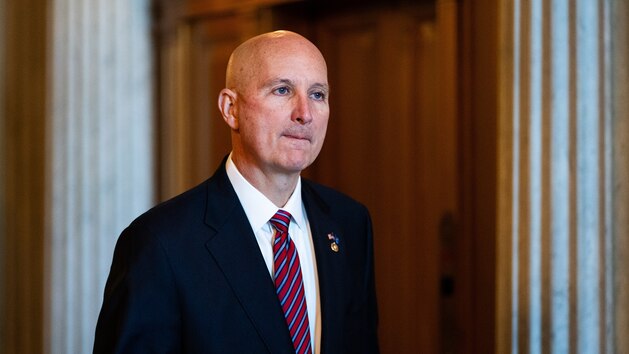
Several notable Republican senators break with Trump over Iran agreement

Several notable Republican senators break with Trump over Iran agreement


(WASHINGTON) — From calling it “the worst foreign policy blunder in decades” to calling President Donald Trump’s memorandum of understanding with Iran “out of step” with his stated objectives, several Republican senators have broken with the president over the agreement.

Core concerns from some of Trump’s closest Hill allies have revolved around the significant economic opportunity for Iran to rebuild with few concessions in return outlined in the short-term agreement Trump signed on Wednesday.

“I do have concerns that certain aspects of this deal are stepping in the wrong direction,” Republican Sen. Tom Cotton, chairman of the Senate Intelligence Committee, told Fox News on Thursday.

“[Trump] deserves enormous credit for making Iran weaker than it’s been in decades, and we need to make sure that we don’t squander the leverage that we built across six years,” the Arkansas senator said.

Cotton’s comments are notable as he has been one of the Senate’s most hawkish voices on the war in Iran and has pushed the president to continue to attack the Iranian regime.

Others Republican senators had similar views of the deal, arguing that it gives Iran immediate relief on oil revenues and pledges to work to unfreeze $24 billion in Iranian assets and help create a $300 billion reconstruction fund for Iran.

‘An exceptionally bad idea’

“History demonstrates that giving billions of dollars to theocratic lunatics who want to murder us is an exceptionally bad idea, and I think unfortunately the president is receiving some really bad advice on this deal,” Sen. Ted Cruz, R-Texas, said of the reconstruction fund. “I don’t want to see us send a penny to the ayatollah, and I hope that we don’t.”

“I support President Trump, and I think his leadership on Iran has been extraordinary. I believe he is getting poor advice, and I think sending billions of dollars to Iran is a mistake,” he added.

Senate Armed Services Committee Chairman Sen. Roger Wicker, of Mississippi, issued a bruising statement about the MOU, saying the proposal to create a $300 billion account to fund the rebuilding of Iran “would make Iran’s payoff under President Obama’s 2015 deal look like a pittance by comparison.”

The memorandum says the U.S. and Middle East partners would develop a $300 billion account for reconstruction and economic development, but Trump said the U.S. wouldn’t be contributing to it.

“We’re not putting up 10 cents,” Trump said Wednesday. “People can decide to do that, but that’s up to them.”

Wicker also said he opposes lifting sanctions on Iran, unfreezing Iranian assets or forcing Israel to stand down against Hezbollah.

“The Iranian regime has not renounced its ultimate goal — death to America, death to Israel. The regime wiill invest every penny it receives to further that aim,” Wicker said.

Additionally, while the agreement calls for the toll-free reopening of the Strait of Hormuz, senators said the future of the strait is unclear and could potentially open the door for Iran to impose fees for safe passage.

Sen. John Cornyn, R-Texas, said whil. “some important things” have been accomplished by the campaign against Iran, “I’m afraid we will look back at this and see a missed opportunity to basically eliminate the threat going forward because there is nothing to stop the regime from beginning to block the Strait of Hormuz again basically at will.”

No demands of Iran on nuclear weapons

Senators also had concerns over the MOU not demanding that Iran destroy its stockpile of highly enriched uranium and that it doesn’t doesn’t provide a mechanism to prevent it from obtaining nuclear weapons in the future, which was one of Trump’s main objectives.

Instead the MOU says Iran reaffirms a longstanding commitment not to pursue a nuclear weapon and to negotiate what to do with the country’s nuclear stockpile.

“Since Day 1, I have supported President Trump’s efforts to end Iran’s 47-year threat to the United States and our partners. I am concerned that the memorandum of understanding negotiates away the victories of Operation Epic Fury in ways that are completely out of step with the President’s goals,” Wicker said in his Thursday statement.

“The terms of the MOU that have been released start off at the outset with 10s of billions of dollars immediately being released to Iran before they make a single nuclear concession. I think that’s a mistake,” he said.

Sen. Bill Cassidy, R-La., also expressed doubts about the agreement, saying, “Iran’s nuclear ambitions were not curbed.”

Graham: Upside outweighs the downside

Other Republicans like Sen. Lindsey Graham, voiced initial skepticism over the agreement but said he was cautiously optimistic that a possible future deal would ease his initial concerns.

While Graham said some of the criticism of the MOU is valid, without it “there’s no pathway to diplomacy to end the nuclear ambitions of Iran. What does that leave you with? War continuation of the status quo, so the upside of signing the MOU was greater, I think, than the downside.”

“Time will tell, but I’m glad we’re on the course on the path to diplomacy, and we’ll know in the coming weeks what kind of deal we will get.

Graham said he told Trump’s Middle East special envoy Steve Witkoff “Pursue a good deal, but be ready to walk away.”

The administration has pushed back on some of those criticisms saying the sanction relief and asset access it has made to Iran is tied to “very concrete nuclear commitments” Iran has made, as well as saying that there will be further negotiations toward a final agreement, calling the memorandum a framework, not a final agreement.

Vice President JD Vance addressed skeptics during a White House press briefing on Thursday.

“People say the Iranians will never change their behavior. Well, maybe that’s true,” he said. “And if so, they don’t get any of the benefits of the bargain. But isn’t it worth trying? Isn’t it worth seeing whether this incredibly weakened position that the president of the United States has put the Iranians under, whether that motivates them to change their behavior, not just vis-a-vis the West, but vis-a-vis the Middle East.”

Copyright © 2026, ABC Audio. All rights reserved.

VP Vance says Iran will only financially benefit if they ‘change their behavior,’ but MOU indicates otherwise

VP Vance says Iran will only financially benefit if they ‘change their behavior,’ but MOU indicates otherwise


(WASHINGTON) — Vice President JD Vance on Thursday directly contradicted what is in the memorandum of understanding between the United States and Iran, touting it as a “win-win” and insisting Iran will only reap financial benefits if they “change their behavior.”

“They don’t get anything unless they change their behavior,” Vance said during a briefing at the White House Thursday morning.

That conflicts with what U.S. officials had said was in the MOU, which states that “immediately upon signing,” the Treasury Department will allow the export of Iranian crude through waivers — a financial windfall for Iran, which has faced sanctions for years. Vance digitally signed the MOU with Speaker Mohammad-Bagher Ghalibaf before President Donald Trump physically signed it Wednesday.

ABC News pushed Vance on the financial rewards that Iran is already receiving simply for reopening the Strait of Hormuz. As part of the agreement, the U.S. is removing its naval blockade of Iranian ports, and Iran will allow commercial traffic through the Strait of Hormuz, which Iran closed after the war started, to be restored to pre-war levels. ABC News asked how Iran is allowed to sell their oil freely without making any new concrete nuclear commitments.

“They’ve made very concrete nuclear commitments. They have committed to the destruction of the highly enriched [uranium] stockpile that they have in their possession,” Vance said, adding that lifting the Strait of Hormuz blockade has promoted “the free flow of energy … across the world.”

However, Vance’s comments conflict with what the deal says. There is no firm commitment from Iran to get rid of their nuclear stockpile — just a commitment to negotiate “the disposition” of it over the next 60 days.

Also, allowing Iran to freely sell oil on the global market now is an economic windfall for Iran, which could generate more than $60 billion a year in revenue, experts told the Wall Street Journal.

Furthermore, Vance defended the oil waivers by arguing the U.S. will gain insight into Iran’s economy.

“So by lifting the blockade, that’s the significant thing that has changed. And by lifting the sanctions, we’re actually going to be able to see a little bit where their financial system actually sends money and receives money. That’s a real benefit to the American people. And that’s really the only thing that has changed by the change in sanctions,” Vance said. 

He also repeatedly stressed that U.S. taxpayer money will not flow directly to Iran — “not a single penny, by the way, from the United States of America under any circumstance.” But a final deal could still allow Iran to reap huge financial benefits, including the unfreezing of assets and a $300 billion reconstruction account for Iran — the details of which will be sorted in the 60-day period.

Pressed on whether Iran can be trusted to change its behavior, Vance asked “isn’t it worth trying?”

Democrats — and some Republicans — have expressed concerns about the MOU. Chuck Schumer, the Senate’s top Democrat, said Iran “took Trump to the cleaners” in negotiations over the MOU in remarks on the Senate floor Thursday. Republican Sen. Bill Cassidy said of the MOU on Thursday: “Iran’s left stronger, we’re left weaker.”

“You know, I’ve seen skeptics of the deal. People say ‘the Iranians will never change their behavior.’ Well, maybe that’s true. And if so, they don’t get any of the benefits of the bargain. But isn’t it worth trying? Isn’t it worth seeing whether this incredibly weakened position that the president of the United States has put the Iranians under, whether that motivates them to change their behavior, not just vis a vis the West, but vis a vis the Middle East,” he said.

Iranian Supreme leader Mojtaba Khamenei said Thursday that Iranian officials entered the agreement from a position of strength, portraying the U.S. president as having pushed aggressively for the deal out of desperation.

Copyright © 2026, ABC Audio. All rights reserved.