
Please ensure Javascript is enabled for purposes of website accessibility
Trump continues red-state campaign push with days until midterms

Trump continues red-state campaign push with days until midterms


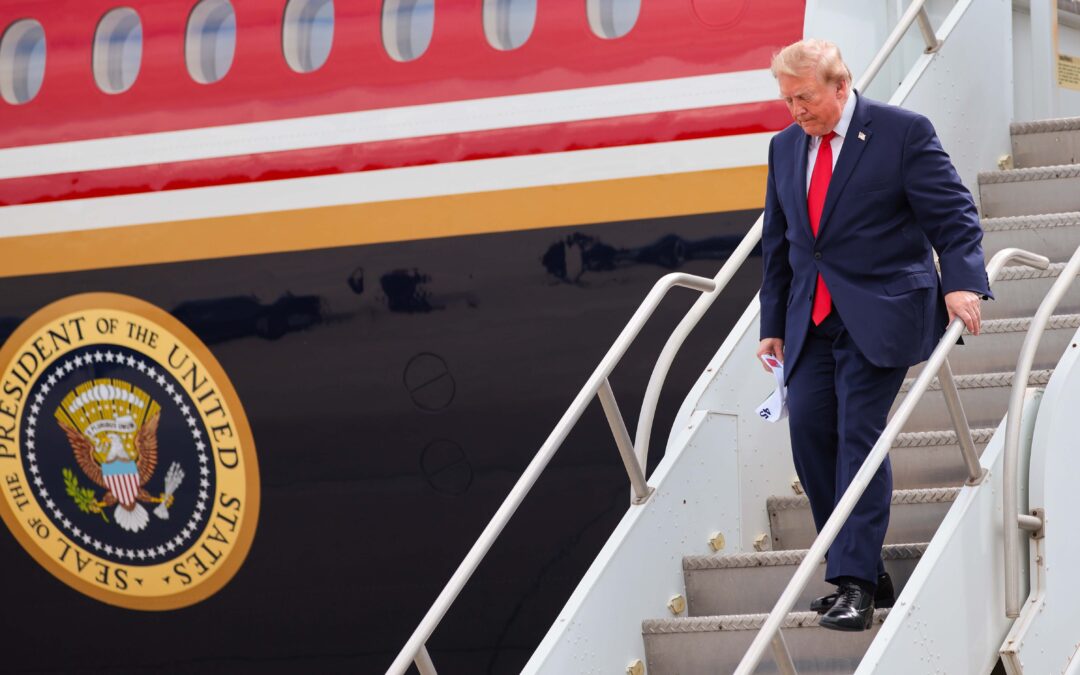
President Donald Trump is barnstorming deep-red states across the country to defend GOP majorities in Congress as Democrats make inroads in some unlikely places.

The president has made 19 stops to states he handily won and six to battlegrounds since Sept. 9, according to ABC News tracking. Those include three in Texas, two in Ohio, two in Tennessee, and visits to states that for some observers may be surprising: Oklahoma, Kentucky and Alabama.

The president is set to make his fourth campaign season trip to Texas — a state he won in three presidential elections — on Tuesday, where he will attend two rallies; Vice President JD Vance will be in Texas for a rally later this week. These two upcoming trips mean Trump and Vance will have visited Texas — typically reliably red — eight times since Labor Day weekend.

An early October ReconMR poll found that among likely Texas voters, Texas Democratic state Rep. James Talarico had 48% support while Republican Attorney General Ken Paxton had 44% support, within the poll’s margin of error.

Trump’s red-state travels come with just days until the high-stakes midterm elections where control of Congress is at stake.

As Democratic candidates largely center their campaigns around affordability and ending the Iran war, they are fending off attacks from Republicans, largely on taxes, culture war and transgender issues. At the same time, Republicans are calling on the president and his Cabinet officials to heed voter economic concerns.

As Republicans look to shore up support among the MAGA faithful, Trump’s approval ratings have suffered. His approval rating recently reached a record low of 33% in the ABC News/Washington Post/Ipsos poll. About 7 in 10 Americans say that gas is unaffordable and that the country is headed in the wrong direction, according to the same poll.

On Monday, Trump hit the campaign trail in Mississippi, where no Democrat has been elected to the U.S. Senate since 1982. Trump carried the state by a 23-point margin in the 2024 presidential election. GOP Sen. Cindy Hyde-Smith is defending her seat against Democrat and district attorney Scott Colom.

“A lot of folks ain’t gonna be able to make this rally because they can’t afford the gas to get up here,” Colom said at a press conference in Corinth ahead of Trump’s rally in the city.

Trump said on Monday that he was supporting Hyde-Smith in the state because he “can’t take a chance.”

“I can’t take a chance. She’s got no problem. The only problem is sometimes, and this happens, and sometimes when you think somebody’s doing so well, nobody wants – they all stay home,” Trump said — later adding “so that’s why I’m here.”

Last week, Trump campaigned in Kansas for Republican incumbent Sen. Roger Marshall, who is fighting in what ABC News is rating a toss-up race for reelection against Democrat Rev. Adam Hamilton. Vance stumped for the one-term incumbent in September and again on Monday.

Hamilton could break a 94-year losing streak for Democrats — he is split even with Marshall among likely Kansas voters, according to a September New York Times/Siena University poll.

Trump is headed back to Kansas on Saturday in Salina, where he will need to run up the score in a county he carried by more than 30 points in 2024.

Several Republicans — including Trump, Vance, Health and Human Services Secretary Robert F. Kennedy Jr. and Speaker Mike Johnson — have visited Wisconsin’s closely watched 3rd Congressional District, where Democrat Rebecca Cooke is facing off against GOP incumbent Rep. Derrick Van Orden. ABC News recently shifted its rating from “toss-up” to “lean Democrat.”

Trump surrogates are also flocking to Iowa, a state Trump won in the last three presidential elections. The president has already paid a visit to Sioux City and will headline a rally in Dubuque just two days before the midterms.

Iowa Democratic Senate candidate Josh Turek, a state lawmaker, is running against Republican Rep. Ashley Hinson to succeed outgoing GOP Sen. Joni Ernst.

Hinson has praised the president but also sought to distance herself at times and recently called for an end to the Iran war.

But Turek told ABC News it is “good” for Trump to see how healthcare funding cuts and tariffs have affected Iowans.

“I think that the war in Iran has hurt Iowa more than any other state,” Turek said.

Kennedy is stumping for Iowa Republican gubernatorial candidate Zach Lahn on Wednesday. Johnson is headlining a rally for GOP incumbent Rep. Zach Nunn in the state’s 3rd Congressional District that same day.

At least nine cabinet members visited Iowa in August, underscoring just how competitive the House races, open Senate and governor races have become.

ABC News’ Oren Oppenheim contributed to this report.

Copyright © 2026, ABC Audio. All rights reserved.
Judge admonishes Trump administration over plans for Washington, DC, golf course


A federal judge has ordered a top Department of Justice official back into court after President Donald Trump posted on his social media account affirming that East Potomac Golf Course will close Nov. 15 for renovations — directly contradicting repeated assertions from administration officials in a hearing last week. 

District Judge Ana Reyes has ordered Associate Attorney General Stanley Woodward to clarify whether his prior statements to her that there were no plans to close the course remain accurate.

She further ordered Woodward’s attendance at a hearing either Friday or Monday where she is expected to press the government for more updates on its compliance with her injunction barring further construction at East Potomac. 

In a sharply worded 70-page ruling, Reyes criticized the Trump administration over its plans for the historic golf course in Washington, D.C., and concluded the administration likely violated environmental laws in the process.

“Rarely, if ever, has the United States Department of Justice urged a federal court not to believe the sitting President,” Reyes wrote. “Not to believe him that a cabinet secretary has ‘developed’ a federal land project. Not to believe him that the secretary’s agency will destroy a historic golf course already on the land. Not to believe him that ‘Restoration work’ will begin ‘IMMEDIATELY!’ Not to believe him that the course ‘will be closed’ for over a year. Not to believe what the President has repeatedly told the American public. And yet, here we are.”

The case began over golf and long walks, Reyes said, but has now morphed into an effort to reconcile sworn statements made by members of the administration with statements made by Trump.

The administration must give “ten business days’ written advance notice before making any irreparable modification to any forms or features of East Potomac Park, pending the outcome of this litigation,” Reyes said.

Hours before the hearing was set to start, the president had posted on social media that construction on East Potomac Golf Course would begin immediately, despite the administration suggesting to the court that it would not.

“If, as DOJ insists, President Trump is wrong, Secretary Burgum can just say so,” Reyes wrote. “He has not. That said, at this juncture Plaintiffs carry the burden of showing a final plan likely exists. They have done so. This is confirmed not just by the President’s and Secretary’s many posts, but also by the Government’s actions, not the least of which is the removal of hundreds of healthy, non-invasive trees on no real notice.”

The tree removal had been scheduled a week earlier, but Reyes concluded that those involved in the lawsuit had little notice to stop the cutting.

The administration also likely violated environmental laws — specifically the National Environmental Policy Act — by “segmenting” the environmental impacts of the construction, she said.

Trump said his administration will appeal the ruling, insisting he will move forward with his plans to shut down the course on Nov. 15 to start the project. 

“We are closing the East Potomac Golf Course Site as scheduled on November 15th in order to renovate and rebuild for Competitive (with other such projects!), Safety, Modernization, and Aesthetic reasons,” Trump wrote on his social media platform overnight. 

He said the judge’s request for updates is “unconstitutional.” 

“We believe this Project is totally ‘as of right,’ and that the judge does not have the Constitutional Right to ‘ask for or receive notices,’ which are time-consuming, unnecessary, expensive, and unconstitutional. We will immediately appeal this decision,” Trump wrote. 

During a gaggle with reporters on Monday night after his Mississippi rally, Trump also said he has a “go-ahead” to work on the renovations and blasted the judge for being an “architectural critic of golf courses.”

“It’s not my golf course, it’s a public course being built in Washington D.C. and it has a go-ahead,” Trump said.

He added that the current public course is “extremely dangerous to play” because it is too close together and that he was asking the D.C. Circuit Court for “immediate remedy.”

Copyright © 2026, ABC Audio. All rights reserved.
Trump admin demands Washington set aside 400 ballots it claims are from noncitizen voters

Trump admin demands Washington set aside 400 ballots it claims are from noncitizen voters


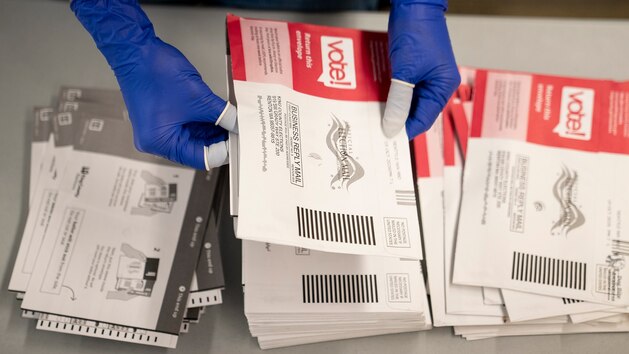
The Justice Department is asking election officials in Washington state to set aside hundreds of ballots it says may belong to noncitizen voters, the latest move by the Trump administration to intervene in a state-run election just days before the midterms.

The move sparked backlash from state officials who said the Justice Department’s intention in publicizing these allegations so close to an election was to create “unfounded suspicion.”

Federal prosecutors in Washington state claimed in a statement Monday that the more than 400 individuals on the list represented “only the tip of the iceberg.” The statement accompanied a letter sent by the state’s two U.S. attorneys demanding that election officials set aside any ballots belonging to individuals on the list. ABC News has not seen the letter.

The Justice Department’s messaging in Washington on Monday echoes steps it took ahead of a lawsuit it filed last week against California, where it has sued to prevent the state from counting more than 20,000 ballots it claims may belong to noncitizen voters.

The Trump administration has promoted a number isolated cases of alleged noncitizen voting in recent weeks as evidence of rampant election fraud. But all available evidence suggests voter fraud and noncitizen voting remains exceedingly rare, and certainly not widespread enough to alter the outcome of any election.

A federal appeals court declined to intervene in that matter and said that the “emergency” the DOJ claimed was in part “self-constructed.”

Local officials in Los Angeles said a sampling of the 20,000 ballots surveyed showed a “high percentage” of people who say they were born in the U.S.

“We saw what happened in California and don’t want Washingtonians to be harassed,” Secretary of State Steve Hobbs said in a statement on Monday responding to the Justice Department’s letter.

Hobbs wrote in his response that at least one of the individuals on the Justice Department’s list dates back to 1994. Since then, 113.5 million primary and general election ballots have been cast in Washington, according to the secretary of state’s office.

“The timing of this request — one week before the General Election — is no doubt intended to cast unfounded suspicion on the results,” Hobbs added. “We are carefully reviewing the request and assessing the information sought to ensure that our response complies with applicable state and federal laws.”
 

Copyright © 2026, ABC Audio. All rights reserved.

In Georgia and beyond, how election officials are working to mitigate distrust ahead of the midterms

In Georgia and beyond, how election officials are working to mitigate distrust ahead of the midterms


Election officials from coast to coast are facing a slew of challenges ahead of the high-stakes midterms, from the Trump administration’s bid to impose itself on state-run elections to last-minute court challenges and threats faced by election workers — all under a persistent sense of distrust in the voting process itself, some experts told ABC News.

“Usually the temperature is much higher — and emotions run much hotter — in a presidential election year than in a midterm election year,” said Wendy Weiser, vice president of the nonprofit Brennan Center for Justice at New York University School of Law. “This year, though, the temperature is staying up at a high level.”

Election experts broadly lay blame for the elevated sense of distrust in elections this year at the feet of President Donald Trump, whose administration has taken unprecedented steps to question the outcome by levelling unfounded claims of widespread voter fraud.

Trump administration officials says steps they’ve taken in recent weeks — including lawsuits in California and Alaska and threats to prosecute election workers — are meant to ensure the integrity of the election. 

But under the weight of those allegations, state officials say the once-collaborative rapport between the federal government and state leaders has in some cases given way to a deep sense of suspicion.

“There’s no trust in that relationship,” Nevada Secretary of State Francisco Aguilar told ABC News. “In order to have a working relationship, there has to be trust, and the fact that they continue to tear that trust apart and spread the misinformation and the lies that they are about our elections is wrong.”

At the same time, people who oversee voting at the county level across the country are frequently fielding questions from voters who say they lack faith in the electoral process. About 6 in 10 Americans are confident the midterm elections will be conducted fairly and accurately, while nearly 4 in 10 Americans and about 3 in 10 voters are not confident , according to an ABC News/Washington Post/Ipsos poll conducted using Ipsos’ KnowledgePanel.

“No matter how transparent we are, people always are questioning what we’re doing [and] how we’re doing it,” Deidre Holden, the director of elections and voter registration in Paulding County, Georgia, told ABC News. “I try to explain [that] we have nothing to hide. You’re welcome to come in and watch the process.”


‘You never know what someone’s going to do’


Holden, who has been an elections official in Georgia for 25 years, said that in her early years in the role, she “used to train people on how to smile and hand out an ‘I voted’ sticker.”

Yet over the last several years, Holden has devoted much of her time to ensuring that everyone at polling places and in the county’s ballot processing facility are safe. She currently has a sheriff’s deputy stationed at every polling location, and in 2024 she first showed ABC News the active shooter training her poll workers were undertaking as a precaution.

“I’m forever concerned with the security of my staff, with my poll workers, with my voters,” Holden said. “You never know what someone’s going to do.”

Paulding County was once a solidly Republican area, but as the suburban sprawl around Atlanta has increased, the county’s population has quadrupled and it is now a purple county with Democrats and Republicans living side by side. With such a partisan divide, Holden said transparency about the process is key.

“Some of our best poll workers have come from the naysayers that didn’t trust us and we invited them in and now they’re our best workers and our biggest advocates because they get to see behind the scenes, they get see how the sausage is made, how we do things and how we do those things with integrity,” Holden said.


‘I just want to find 11,780 votes’


The official once again overseeing the election at the state level in Georgia this November is Secretary of State Brad Raffensperger, a Republican who rose to national prominence in January 2021 after receiving a phone call from President Donald Trump.

“All I want to do is this: I just want to find 11,780 votes,” Trump told Raffensperger at the time, claiming it was “not possible” that he lost Georgia’s 2020 presidential election.

Joe Biden won the 2020 election in the Peach State and Raffensperger certified the results, despite facing criticism from some other Republicans.

“At the end of the day we did our job, we followed the law and we followed the constitution,” Raffensperger told ABC News in a recent interview.

“I know I did the right thing, and I feel sorry for people that didn’t do the right thing, because at some point, they’re going to have to look at themselves in the mirror,” he said.

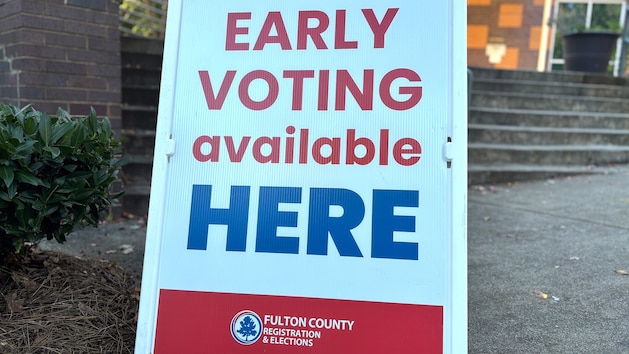
Raffensperger’s time in office will end in January. Early voting for the midterms is currently underway in Georgia, and Raffensperger said he is confident that residents will have an accurate idea of the projected election results by midnight after the polls close.

“Those ballots actually in effect will be counted three times just to verify the result, so at the end of the day, we know that the winner won and that’s our job,” Raffensperger said.


‘What they’ve been able to uncover is nothing’


While Raffensperger was on the phone with Trump in 2021, many recent dustups between the federal government and state agencies have involved staffers going back and forth over email and video conferencing.

At the core of the growing friction is the claim by President Trump and DHS officials that the country has a “broken” election system, where they claim 278,000 people who are not U.S. citizens have registered to vote illegally.

Weiser told ABC News that the Trump administration has been attempting to “substantiate their theory that our country is plagued by widespread voter fraud.”

“What they’ve been able to uncover is nothing,” Weiser said. “Our elections, in fact, are safe and secure.”

The allegations of widespread noncitizen voting have not just been made at press conferences. Over the summer, DHS employees reached out to states around the U.S., sending letters and holding meetings about “the concerning results” of what they called a “preliminary review” of potential noncitizens registered to vote.

Aguilar, the Nevada secretary of state, said members of his office ended up on a video conference call in August with DHS representatives alleging that there could be as many as 15,903 noncitizens registered to vote in Nevada.

One of the DHS officials on the call was Heather Honey, a known election denier and a key figure in the fight to overturn the results of the 2020 presidential election.

While not overtly hostile, a recording of the video conference obtained by ABC News shows palpable tension and some awkward exchanges, as Nevada officials seemed deeply skeptical of the claims made by DHS.

“So what you’re saying is the 15,000 number has not been vetted?” a Nevada official asked, according to a recording of the video conference.

“I probably wouldn’t use the sentence, ‘It hasn’t been vetted,'” a DHS representative responded, adding that each out has not “had a full manual review.”

Following the meeting, DHS officials emailed Nevada officials with a new figure — claiming they found 185 noncitizens on the state’s voter rolls during a preliminary sweep. Officials in Nevada said the DHS was wrong, replying later that, after their own review of those 185 individuals, “our records indicate that they were citizens.”

In response to a request by ABC News for comment, DHS stood by their work, which they called “a service to Nevada’s citizens,” and accused Nevada officials of knowingly harboring illegal voters on its lists.

“Nevada knows the 185 names they keep waving around were never the full list of illegal voters,” a Homeland Security spokesperson said in an email. “They were only the files [that immigration officials] had finished reviewing at the moment of the call. Since then, [immigration officials] have manually confirmed about 2,000 more aliens from the same list. The review is just beginning.”


Trusting the process


While voting in the upcoming election will conclude on Nov. 3, there is concern among some election experts that the relationship between federal leaders and their counterparts at the state and local levels might not be easily repairable.

The federal government has traditionally supported state and local officials on a slew of election-related matters, from mitigating foreign threats to cybersecurity. With the fragile state of affairs, some experts fear any Election Day complications could threaten the integrity of the vote.

“Our state and local election officials are going to have fewer resources at their disposal, less intelligence and less ability to coordinate in responding to what might be significant threats going forward because they don’t trust the federal government as a partner the way they did,” Weiser said.

While trust in how elections are being conducted remains top of mind for voters, election officials like Holden, Aguilar and Raffensperger are working to assure their residents that they should still have faith in the process.

“There’s no reason for a voter to ever doubt their ballot,” Holden said.

Copyright © 2026, ABC Audio. All rights reserved.
Man who allegedly sent white substance to members of Congress put his address on envelopes: DOJ

Man who allegedly sent white substance to members of Congress put his address on envelopes: DOJ


A man was charged with allegedly sending letters with white granular substance, which turned out to be salt, to four members of Congress, according to a criminal complaint unsealed on Monday in federal court in Springfield, Illinois. 

He was allegedly heard about reports of other letters with suspicious substances being sent to senators and secretaries of state around the country, the court documents said.

Matthew Unglesbee allegedly sent the letters to four members of Congress in the Northern District of Illinois, including the office of one U.S. senator, according to the Justice Department.

In one House member’s office, the letter sent felt like it contained a powder substance, which turned out to be salt, the complaint said. The staffer felt something inside the letter and called 911, and subsequently alerted other Congressional offices in the area, according to the complaint.

Inside there was white granular substance, and a note that read “HA HA,” according to the department. In the letter to the U.S senator, it read “HA HA HA enjoy your gift,” the prosecutors allege.

Investigators found the return address on the letters to be Unglesbee’s, according to the court records.

Authorities interviewed him at his home and he allegedly told them he was aware of other suspicious substance letters sent to offices around the country.

“Unglesbee told agents he mailed the four letters to the four members of Congress after hearing someone in a restaurant mention the news story of other letters being mailed earlier this month,” the complaint said. “Unglesbee acknowledged being aware of past mailing of white powder sent in letters including anthrax. Unglesbee said he knew recipients of white powder letters ‘took it serious and would have ‘hazmat come in white suits’ because ‘anthrax is dangerous.'”

He allegedly said he was joking but recognized the recipients of the letter could see the letters as a threat, according to the complaint. 

When investigators searched his home, they found a fifth envelope addressed to one of the members’ Washington, D.C., office, the complaint said.

A lawyer for Unglesbee declined comment when contacted by ABC News.

Copyright © 2026, ABC Audio. All rights reserved.

Judge rules Trump DOJ ‘unlawfully’ fired Maurene Comey

Judge rules Trump DOJ ‘unlawfully’ fired Maurene Comey


A federal judge in New York on Monday ruled against President Donald Trump and the Justice Department over the firing of Maurene Comey, daughter of former FBI Director James Comey, from the Manhattan U.S. attorney’s office. 

Judge Jesse Furman said Comey’s termination violated civil service rules. 

“Yes, the Attorney General is authorized by law to remove an AUSA. But the Attorney General (and anyone to whom the Attorney General delegates that authority) is also limited by law, namely the CSRA, to do so only in a particular manner and only for certain reasons,” the judge wrote.

Furman ordered Maurene Comey, who most recently led the prosecution of Sean “Diddy” Combs, reinstated with back pay.

In addition to calling her termination unlawful, Furman decided Trump and the DOJ violated the separation of powers, the Administrative Procedure Act and Maurene Comey’s due process rights. 

“The Department disagrees with this decision and will appeal in due course,” a DOJ spokesperson told ABC News.

A spokesperson for the U.S. Attorney’s Office for the Southern District of New York declined to comment. 

ABC News has reached out to Maurene Comey for comment.

Furman’s ruling outlines that Maurene Comey’s reinstatement applies from the date of her termination in July of 2025 until December, when she effectively resigned from her role by accepting a new job in the private sector. 

In ordering Maurene Comey’s reinstatement, Furman rejected what he described as the Trump administration’s “sweeping and unprecedented theory of executive authority.” 

The Trump administration had argued that not only was Maurene Comey’s firing lawful under federal statute, but that the laws protecting civil servants were also an unconstitutional intrusion into Trump’s authority. 

“The question at the heart of this case is whether these limitations on the removal of Assistant United States Attorneys are consistent with Article II and the constitutional separation of powers,” Judge Furman wrote. 

To make its argument, the DOJ pointed to the Supreme Court’s decision in Trump v. Slaughter — where the justices effectively supercharged presidential power by greenlighting the firing of the leaders of independent federal agencies — and the Trump v. United States immunity case

“On their view, AUSAs who represent the United States in criminal cases in court exercise prosecutorial and investigatory functions that fall squarely within the President’s ‘conclusive and preclusive’ powers,” Furman wrote. “Accordingly, they argue, the President — and, by extension, the heads of departments appointed by the President — must have the power to remove such AUSAs for any reason or no reason at all.” 

But Furman rejected the DOJ’s interpretation of the legal precedent, pointing to decades of other cases which affirm the legal protections for line prosecutors. He also noted that neither case cited by the DOJ applies to inferior officers or “supports their sweeping and unprecedented theory of executive authority.” 

“Defendants’ argument is contrary to an unbroken line of Supreme Court decisions dating back almost two centuries, and the Supreme Court itself has not formally overruled any of those decisions. That is sufficient, in itself, to reject the argument,” wrote Judge Furman. 

To accept the DOJ’s argument, Furman wrote, would “unsettle the very equilibrium established by this Nation’s constitutional system.” 

Maurene Comey was an assistant U.S. attorney who successfully prosecuted Ghislaine Maxwell, the former associate of sex offender Jeffrey Epstein, and multiple gang members before the split verdict last year in the trial of Combs, who was convicted of a prostitution-related charge but acquitted of more serious charges.

She was also involved in the office’s case against Epstein, who died by suicide in 2019 at New York City’s Metropolitan Correctional Center while he was awaiting trial on federal sex trafficking charges.

Trump fired James Comey during his first term in office after Comey announced publicly that Trump’s 2016 campaign was being investigated over potential ties to Russia.

Prior to Maurene Comey’s firing, Trump privately vented about having a Comey work in his administration, sources previously told ABC News.

Earlier this year, Furman blocked the Justice Department’s attempt to move Maurene Comey’s lawsuit over her firing as a federal prosecutor out of court.

The Justice Department argued at the time that her case belongs before the Merit Systems Protection Board and not in federal district court.

Furman decided the case belongs with him because Maurene Comey was fired pursuant to the president’s executive authority and not the usual procedures for civil servants. 

“Maurene Comey was, by all accounts, an exemplary Assistant United States Attorney. In her nearly ten years working at the United States Attorney’s Office for the Southern District of New York, she was assigned some of the country’s highest profile cases, and she consistently received the highest accolades from supervisors and peers alike,” the judge’s opinion in April said.

The DOJ, in court filings, has characterized Comey’s case as routine.

“A federal employee’s claims that removal from federal service was arbitrary and capricious or conducted in a manner that did not provide the process to which they contend they were due is not a novel issue,” government attorneys previously said.

Following her termination last year, Maurene Comey told colleagues in a farewell email that she was fired as a federal prosecutor without being told a reason but urged them not to succumb to the “fear” she said her firing could cause.

“If a career prosecutor can be fired without reason, fear may seep into the decision of those who remain,” Comey said in her email, a copy of which was obtained by ABC News. “Do not let that happen.”

Copyright © 2026, ABC Audio. All rights reserved.